This article is part of our Ultimate Wedding Dress Shopping Guide.
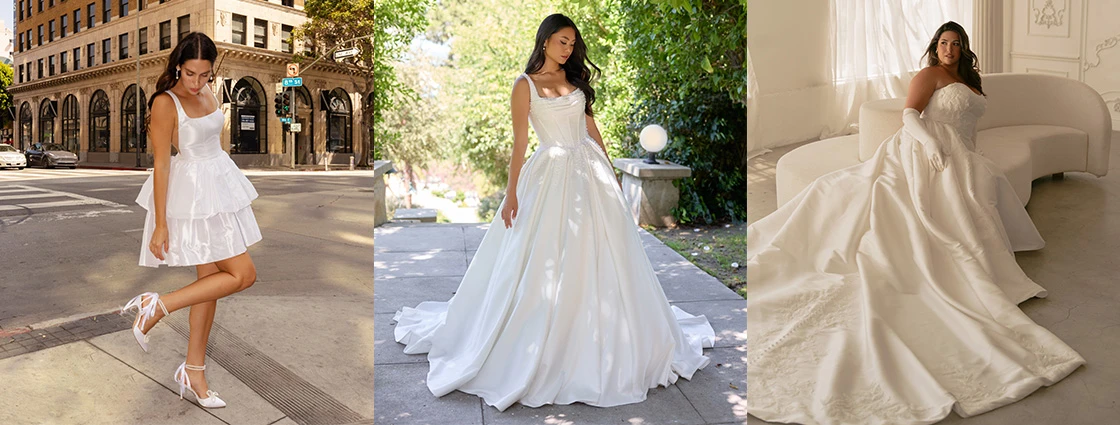
From playful minis and chic midis to floor-sweeping gowns, wedding dresses come in lengths to suit every bridal style. Choosing the right wedding dress length comes down to your venue, personal style choices and the statement you want to make as you walk down the aisle. The goal? Finding a gown that moves with you, makes you feel incredible and feels true to who you are.
Perhaps you envision a sculpted silhouette gliding down an elegant aisle. Maybe something chic and minimal feels right for a civil ceremony. Or perhaps you want a high-energy reception look that lets you dance freely.
How Long Should Your Wedding Dress Be?
The short answer? Exactly as long as you want it to be. A gown can fall anywhere from above the knee to sweeping the floor, often finishing with a stunning train. For a traditional floor-length look, the front hem generally skims the ground once you’re wearing your day-of shoes. This gives you a polished appearance while still letting you move comfortably.
Shorter hems offer incredible flexibility and individual expression. They create a distinct vibe that is ideal for relaxed celebrations, destination weddings and second looks.
Before making a choice, weigh these styling considerations:
- Your venue setting: Will you walk across a grand ballroom, sand or city streets?
- Your personal vibe: Do you lean toward a romantic silhouette, clean lines or something statement-making?
- Your movement needs: Will you be navigating stairs or spending your time outdoors?
- Your statement shoes: Shorter hemlines put statement heels or boots in the spotlight.
- Your authentic self: Ultimately, your gown should be exactly your own.
What Are the Different Wedding Dress Lengths?
Hemlines generally range from mini to floor-sweeping lengths, with floor-length gowns often featuring a train extending behind you. If you are just starting your wedding dress search, it helps to understand where each hem falls.
| Dress Length | Where It Falls | Beautiful For |
| Mini | Above the knee | Receptions, elopements, courthouse weddings |
| Knee-Length | At or near the knee | Intimate and casual celebrations |
| Midi | Between the knee and ankle | Modern, city and courthouse weddings |
| Tea-Length | Mid-calf to above the ankle | Garden and vintage-inspired weddings |
| Full-Length | Near the floor | Traditional ceremonies and easy movement |
| Floor-Length | Skims the floor | Nearly every bridal vibe and venue |
Mini Wedding Dress
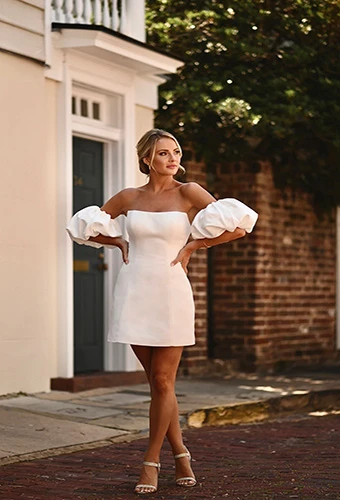
Bridal looks don’t have to reach the floor to command a room. Short. Chic. Iconic. A mini wedding dress falls above the knee, highlighting your legs and your footwear while giving you the freedom to move and celebrate.
This style is perfect for a ceremony-to-after-party transition. You can slip out of a traditional gown into a mini and swap your veil for sleek accessories. Consider Essense of Australia Style D3957, a chic strapless mini with clean lines and a modern structured satin design. Add the detachable puff sleeves and satin overskirt for a dramatic ceremony look, then remove them for an easy reception change.
Knee-Length Wedding Dress
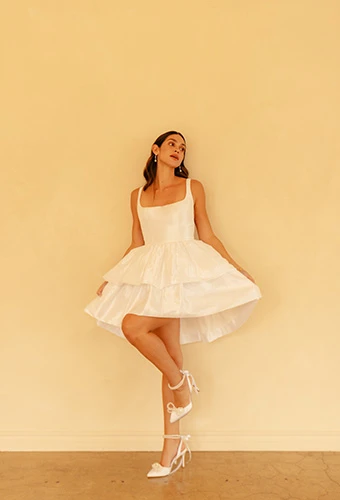
Falling right at or near the knee, a knee-length wedding dress offers the movement-friendly benefits of a mini with a bit more coverage. It feels relaxed but beautifully polished, capturing a spirit of understated elegance.
Because the hem highlights your footwear, your shoes become an essential part of your self-expression. A pointed-toe pump pairs gorgeously with a city vibe, while an embellished flat suits casual gatherings.
Midi Wedding Dress
A midi wedding dress falls between the knee and ankle, usually landing around mid-calf. This look has become a favorite for those who want a bridal look without feeling tied to past traditions.
A sleek column midi offers a modern, sophisticated edge, while a fuller skirt delivers a romantic silhouette. It bridges the gap between casual and formal with ease.
Tea-Length Wedding Dress
Falling between mid-calf and the ankle, a tea-length wedding dress channels a timeless, romantic mood. Full skirts at this length create a gorgeous shape with plenty of movement, reminiscent of mid-century elegance.
Imagine a structured tea-length gown with a corset back, worn with delicate heels through a garden ceremony. It feels incredibly stylish while remaining functional for outdoor settings.
Full-Length Wedding Dress
A full-length wedding dress hem lands near the floor, sometimes allowing your bridal shoes to remain visible as you step. It gives you the visual impact of a long gown without necessarily flowing into a long train.
Because your footwear might peek through, it’s crucial to bring your actual shoes when having your gown altered. This ensures the proportions support you beautifully.
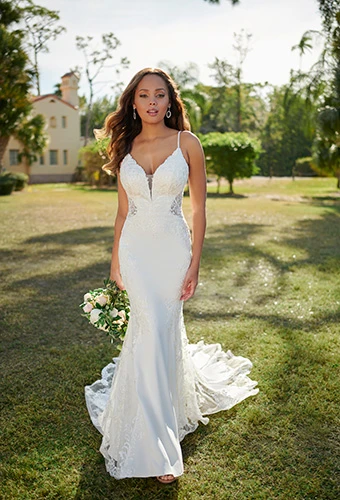
Floor-Length Wedding Dress
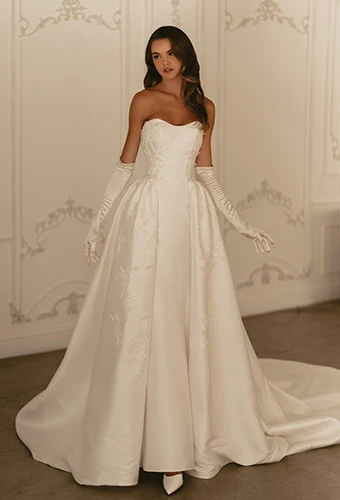
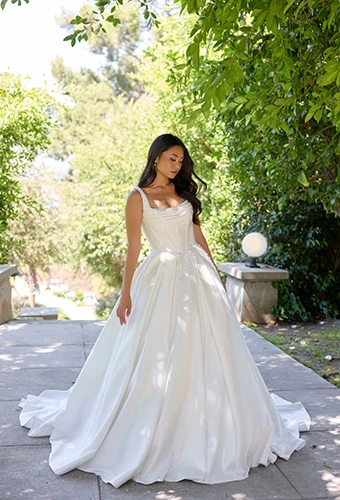
A floor-length wedding dress skims or gently touches the floor, offering a classic bridal look that ranges from minimalist to grand. It’s incredibly versatile and works in almost any setting.
A sleek sheath gown creates a clean, easy vibe, while a ballgown with a structured bodice and sweeping hem makes a statement. The length lets you to pair the gown with everything from a subtle veil to unapologetically dramatic accessories.
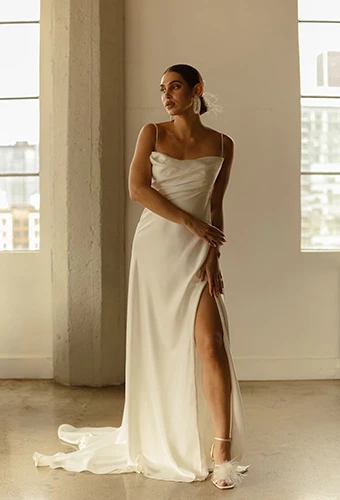
What Is the Difference Between Hemlines and Train Lengths?
Your dress hemline describes where the front of the gown falls, while the dress train describes how the fabric sweeps behind you. A floor-length gown can have no train at all, or it can flow into a dramatic one.
If you picture a dramatic walk down the aisle, explore different train lengths to see what feels right. A court train brings subtle movement, while a cathedral train creates unmatched drama. Longer isn’t necessarily better; it’s about the look you want to express.
How to Choose a Wedding Dress Length for Your Venue
Your venue sets the tone, and your wedding dress length can seamlessly tie your look to the setting. When navigating grass, sand or marble floors, the right length keeps you comfortable and confident.
- Beach or Destination: Lightweight fabrics and manageable hemlines keep sand and travel stress-free. Midi, tea-length or floor-length gowns with detachable trains are gorgeous, practical choices.
- Garden or Outdoors: Terrain matters when navigating uneven pathways. A tea-length style or a floor-length gown with a custom bustle keeps your look polished and prevents the hem from dragging.
- Courthouse or City Hall: Modern city settings give you permission to play with proportion. Minis and midis are great style choices for these locations.
- Ballroom or Church: Expansive indoor venues offer a gorgeous canvas for a floor-length gown with a sweeping cathedral train. These settings practically demand a grand entrance.
How Do Silhouettes and Hemlines Work Together?
The silhouette of your wedding dress and your hemline work together to create a cohesive look that accentuates your style. Here’s how common silhouettes pair with different lengths:
- A-line gowns: Incredibly versatile, these work beautifully across midi, tea and floor lengths.
- Ballgowns: These traditionally feature floor-length hemlines, maximizing the volume and drama of the skirt.
- Sheath and column styles: These naturally complement sleek midi and modern floor-length designs.
- Fit-and-flare styles: These shine at floor length, where the lower skirt has room to flare and flow beautifully.
These are simply styling considerations. Trying different combinations during your True Society bridal appointment helps you discover what you love.
Wedding Dress Lengths for Petite Brides
For petite brides, proportion can have a major impact on how a hemline looks.
A sleek floor-length gown can create one long visual line, while a thoughtfully placed mini or midi hem can showcase your legs and statement shoes. With midi and tea-length styles, tailoring is especially important because even a small change in hem placement can alter the overall proportions.
Don’t rule out dramatic gowns, either. Petite brides can absolutely wear ballgowns and long trains. Focus on the complete silhouette rather than assuming a certain length is off-limits.
Wedding Dress Lengths for Plus-Size Brides
Every wedding dress length can work beautifully for a plus-size bride.
Rather than following outdated rules about which bodies “should” wear certain lengths, consider the silhouette, fabric, movement and overall look you love.
A floor-length A-line can create soft movement. A fitted gown can celebrate your curves. A midi can showcase fabulous shoes and bring fashion-forward energy to your bridal look.
The right choice is the combination that makes you feel confident and completely true to you.
How Do Wedding Dress Alterations Affect Your Dress Length?
Your final hemline is determined during professional alterations, not just by how a sample gown fits in the fitting room. Tailoring brings your visions to life.
True Crew Tip: Always bring your wedding day shoes to your fittings so your specialist can place the hem precisely. Your specialist can also discuss closures, day-of adjustability, and custom bustles. A wedding dress bustle secures your train after the ceremony, so you can move and dance with ease.
Find a Wedding Dress Length That Feels True to You
Mini or midi. Tea-length or floor-sweeping. Understated or full of drama.
There isn’t one “correct” wedding dress length. There’s the length that works with your venue, complements your bridal vision and makes you want to keep looking at yourself in the mirror.
And sometimes, the style you never imagined wearing is the one that surprises you most.
At True Society, our expert True Crew stylists can help you explore different wedding dress lengths, silhouettes, fabrics and trains in person, so you can discover how each one actually looks, moves and feels on you.
Ready to find a wedding dress that feels truly yours? Find a True Society bridal shop near you and book your bridal appointment to start your search.
FAQs About Wedding Dress Lengths
Should a wedding dress touch the floor?
A floor-length wedding dress is generally altered so the front hem lightly skims the floor while allowing you to walk comfortably. Your shoes and alterations will help determine the exact finished length.
Should your shoes show under a wedding dress?
They can! Whether your shoes show depends on your dress length and personal style. Floor-length gowns may conceal most of the shoe while standing, whereas mini, midi and tea-length dresses make footwear a much more visible part of your bridal look.
What wedding dress length is easiest to walk in?
Shorter wedding dresses generally offer the most freedom of movement. For a floor-length gown, professional hemming and an appropriate bustle can make walking and dancing easier.
Is a midi wedding dress appropriate for a wedding ceremony?
Absolutely. Midi wedding dresses can be beautiful for courthouse ceremonies, garden weddings, intimate celebrations and modern weddings. Fabric, construction and accessories can make a midi look relaxed or elevated.
Can petite brides wear floor-length wedding dresses?
Yes. Petite brides can wear any wedding dress length. A streamlined floor-length silhouette may create a long visual line, while thoughtful tailoring helps keep the gown beautifully proportioned.
Can plus-size brides wear short wedding dresses?
Yes. Wedding dress length isn’t limited by size. Mini, midi, tea-length and floor-length dresses can all create gorgeous bridal looks. Focus on the fit, movement and style that make you feel confident.
What wedding dress length is best for an outdoor wedding?
Midi, tea-length and floor-length gowns with manageable trains can all work beautifully outdoors. Consider the terrain, weather and amount of walking involved when making your choice.
