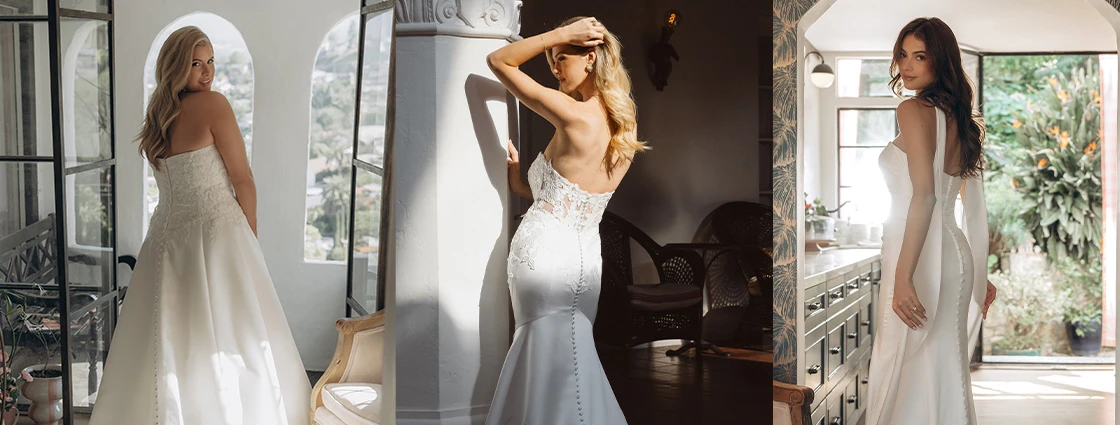
Wedding dress closures are the fastenings that secure a bridal gown, most often at the back or side. The most common types are zippers, corset or lace-up backs, and buttons. Each closure offers a different balance of fit, flexibility, support and bridal style.
The back of a wedding dress does more than complete the look. Its closure helps determine how the gown fits, how supported you feel and how easily you can get dressed on the wedding morning.
From a romantic corset back to a nearly invisible zipper, the right closure should feel secure, comfortable and true to you. Here is everything to know before choosing your gown.
This article is part of our Ultimate Wedding Dress Shopping Guide.
What Are the Different Types of Wedding Dress Closures?
The four most common bridal gown closures are:
- Zippers
- Corset or lace-up backs
- Buttons and loops
- Hook-and-eye fasteners
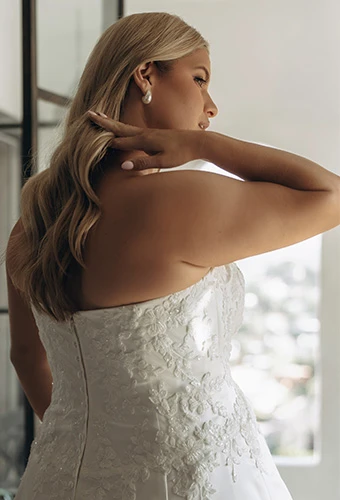
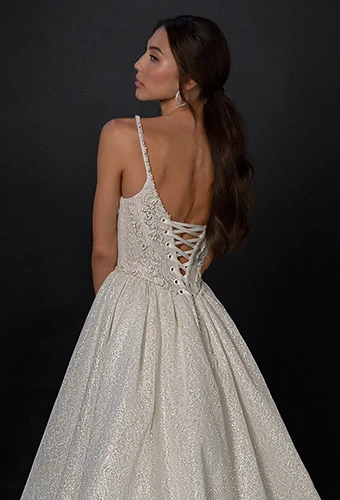
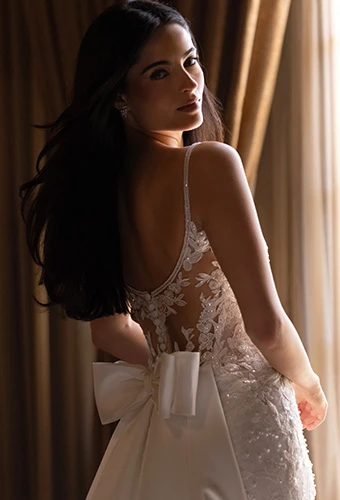
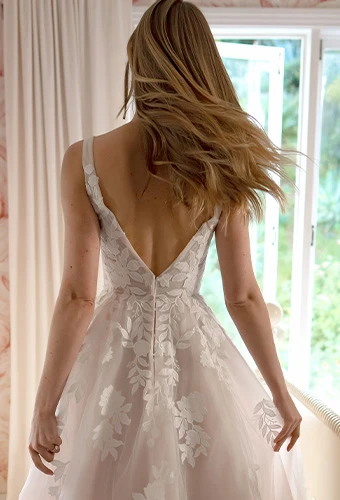
Some wedding dresses combine more than one closure. For example, a gown may have a concealed zipper for security with fabric-covered buttons layered over it for a timeless bridal finish.
Wedding Dress Closure Comparison
| Closure Type | Best Known For | Adjustability | Dressing Time | Overall Look |
| Zipper | Speed and a precise fit | Low | Fast | Clean and modern |
| Corset or lace-up back | A flexible, customizable fit | High | Longer | Romantic and structured |
| Buttons and loops | Timeless bridal detail | Low to moderate | Longer | Classic and elegant |
| Hook-and-eye | Added security | Low | Fast | Usually concealed |
There is no single best wedding dress closure for every bride. The right choice depends on the gown’s construction, your preferred fit and the details that make you feel most confident.
What Is a Zipper-Back Wedding Dress?
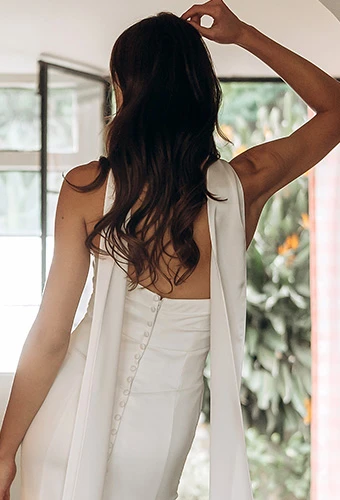
A zipper closure fastens the gown quickly and creates a smooth, secure fit. It may be positioned at the center back, along the side seam or beneath a row of decorative buttons.
Concealed zippers are especially popular on minimalist wedding dresses because they keep the fabric looking clean and uninterrupted. Exposed zippers may be used as a modern design detail, although they are less common in traditional bridal styles.
Benefits of a Zipper Closure
A zipper-back wedding dress may be right for you if you want:
- A quick and simple dressing process
- A sleek, streamlined back
- A closely tailored fit
- Minimal visible hardware
- A clean finish beneath buttons or lace
Zippers work especially well with fitted silhouettes, including sheath, column, mermaid and fit-and-flare gowns. A hidden zipper allows smooth crepe, satin or Mikado fabric to remain the focus.
What to Consider
A zipper offers less day-of adjustability than a corset. Because the fit is more precise, professional alterations are especially important.
When trying on a zipper-back gown, check that the fabric lies smoothly without pulling across the back or waist. You should be able to breathe, sit and raise your arms comfortably without placing excess tension on the zipper.
True Crew Tip
Move around in the gown during your bridal appointment. Sit, walk, turn and take a few practice dance steps. A beautiful fit should also feel comfortable beyond the fitting-room mirror.
What Is a Corset-Back Wedding Dress?
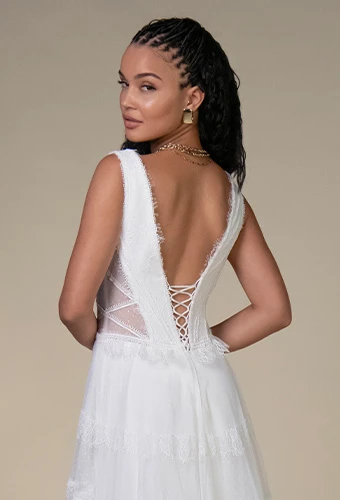
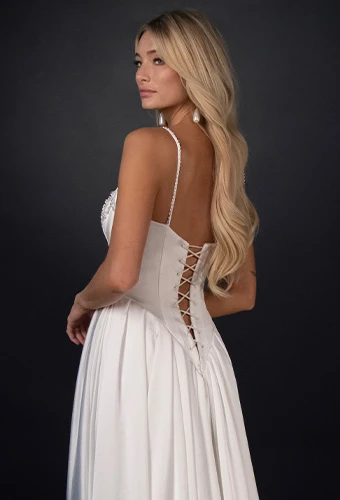
A corset-back wedding dress uses ribbon or lacing threaded through loops along the back of the bodice. The lacing is gradually tightened to create a secure, adjustable fit.
The finished look may feel romantic, dramatic or softly vintage depending on the fabric and design. Satin ribbon creates a polished effect, while delicate lacing paired with floral lace can feel whimsical and free-spirited.
Many corset-back gowns include a modesty panel beneath the lacing so the back remains covered as the fit is adjusted.
Benefits of a Corset Closure
A corset or lace-up back can offer:
- Greater fit flexibility
- Adjustable bodice tension
- Structured support
- A defined waist
- A striking visual detail
Because the lacing can be loosened or tightened, a corset back may accommodate modest measurement changes more easily than a zipper closure.
However, adjustability does not replace professional fitting. The gown’s cups, waist, boning and internal support should still be properly fitted to your body.
What to Consider
Corset backs take longer to fasten than zippers. The person helping you dress should know how to lace the gown evenly without pulling too tightly.
The lacing should feel supportive, not restrictive. Over-tightening can create uneven folds, discomfort or pressure through the bodice.
Styling a Corset-Back Wedding Dress
Corset closures pair beautifully with:
- Romantic ball gowns
- Lace A-line dresses
- Strapless wedding dresses
- Basque-waist bodices
- Garden, castle or estate wedding settings
- Soft updos and side-swept hairstyles
A hairstyle that lifts the hair away from the back allows the lacing and bodice details to become part of the full bridal look.
True Crew Tip
Ask your stylist or alterations professional to demonstrate how the corset should be laced. Record the demonstration on a phone so your chosen helper can review it before the wedding.
What Is a Button-Back Wedding Dress?
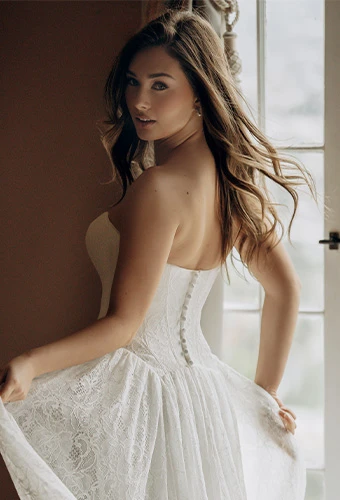
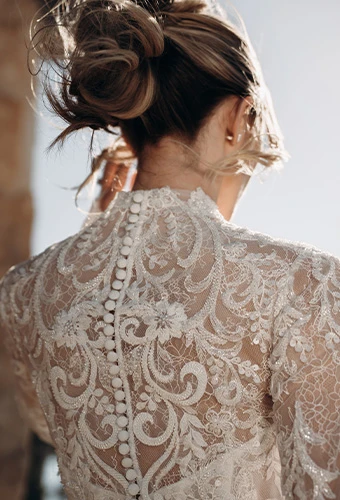
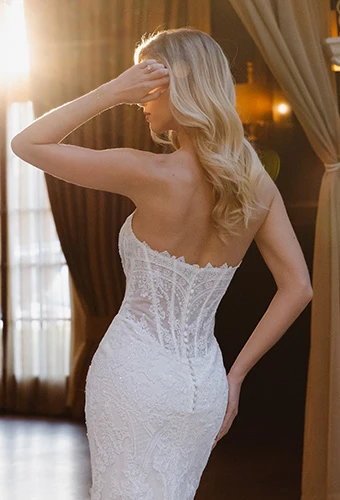
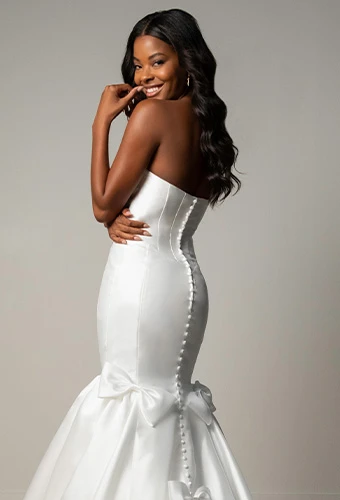
Button-back wedding dresses feature a row of buttons extending along the bodice, skirt or train. The buttons may be functional, decorative or a combination of both.
Functional buttons fasten through small bridal loops. Decorative buttons are often placed over a concealed zipper, offering the beauty of a traditional button back with a quicker dressing process.
Popular Wedding Dress Button Styles
Bridal buttons may be:
- Covered in matching gown fabric
- Finished with pearls
- Embellished with crystals
- Paired with delicate elastic loops
- Extended from the bodice down the train
Imagine a line of fabric-covered buttons beginning at the upper back and continuing past the waist, tracing the shape of the gown before disappearing into a sweeping wedding dress train. It is a small detail with a beautifully lengthening effect.
Benefits of Button Closures
Buttons can:
- Add timeless bridal character
- Create texture on simple fabric
- Highlight the back of the gown
- Visually elongate the silhouette
- Blend traditional style with modern construction
They are especially striking on satin ball gowns, clean crepe dresses, long-sleeve lace gowns and classic A-line silhouettes.
How Do You Fasten Wedding Dress Buttons?
Small bridal loops can be difficult to pull over the buttons using only your fingers. A crochet hook or bridal button tool can make the process much easier.
Slide the hook carefully through the loop, pull it over the button and release it gently. Avoid tugging on the loop or surrounding fabric.
Allow extra time when a gown has many functional buttons, particularly if they continue down the skirt or train.
What Is a Hook-and-Eye Closure?
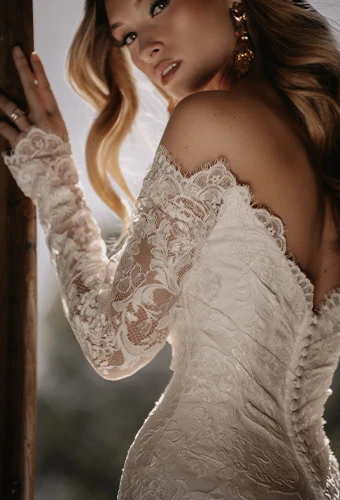
A hook-and-eye closure consists of a small metal hook that fastens into a loop or eye. It is often used at the top of a zipper to reduce tension and help hold the gown securely in place.
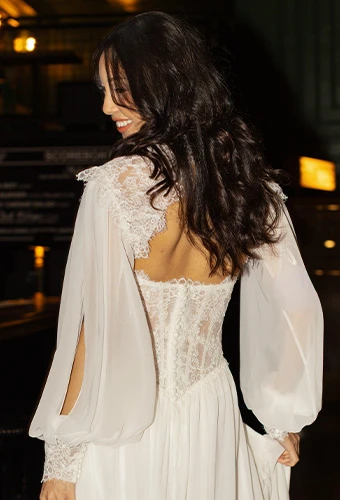
Hook-and-eye fasteners may also appear:
- Inside structured bodices
- Beneath decorative buttons
- At the waistband
- Behind lace or appliqué
- Alongside snaps or inner support bands
These small closures are usually supporting details rather than the gown’s main fastening. Though subtle, they can make the dress feel more secure.
Corset vs. Zipper Wedding Dress: Which Is Better?
Neither closure is universally better. The choice depends on your style, fit preferences and wedding-day priorities.
Choose a Corset Back When You Want:
- More adjustability through the bodice
- A romantic back detail
- Flexible tension and support
- A visibly structured look
Choose a Zipper When You Want:
- Faster dressing
- A smooth, minimal finish
- A precise tailored fit
- Fewer visible fastenings
Choose Buttons When You Want:
- A timeless bridal look
- Texture and craftsmanship
- Detail extending down the back or train
- Traditional beauty with modern functionality
During your appointment, notice more than the appearance of the closure. Ask yourself how easy it is to move, how secure the bodice feels and whether the fastening process works for your wedding plans.
Which Closure Works Best With Each Wedding Dress Silhouette?
The gown’s construction usually determines which closures are possible, but certain options naturally complement different silhouettes.
Ball Gown
Corset backs add romantic structure to a voluminous ball gown, while an extended line of buttons feels timeless and regal. Both details can balance the grandeur of a full skirt.
A-Line
A-line dresses work beautifully with nearly every closure. Choose based on your preferred look and level of adjustability.
A concealed zipper keeps the design simple, while buttons add traditional detail. Corset lacing can create a more romantic, defined bodice.
Mermaid and Fit-and-Flare
Zippers help create the precise fit associated with mermaid and fit-and-flare silhouettes. A corset back may provide additional flexibility through the bodice while preserving the gown’s sculpted shape.
Sheath and Column
A concealed zipper is often ideal for sheath and column gowns because it protects their smooth, uninterrupted lines.
Small fabric-covered buttons may also create a refined focal point without overwhelming a minimalist dress.
Strapless Wedding Dress
Both corset and zipper closures can work well with a strapless bodice. The most important factors are the gown’s internal construction, cup placement, boning and overall fit.
A corset may offer adjustable tension, but a professionally fitted zipper bodice can feel equally secure.
How Should Different Brides Choose a Closure?
Every body and every bridal vision is different. Rather than choosing a closure based on a rule, focus on how the entire gown supports and celebrates you.
Wedding Dress Closures for Plus-Size Brides
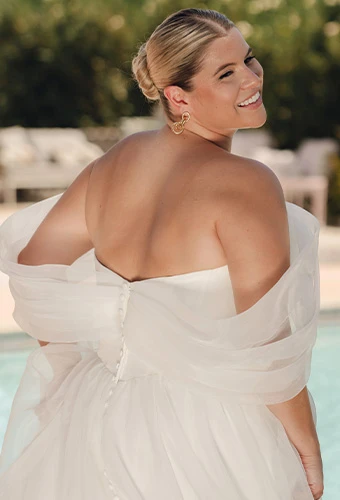
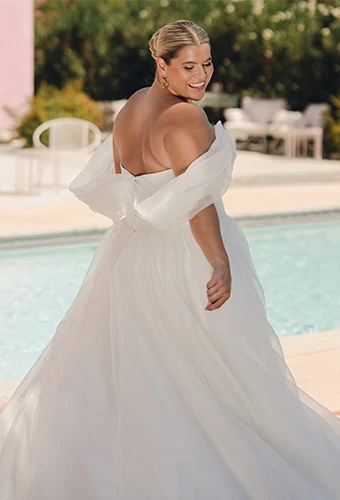
A corset back may offer greater flexibility through the bodice, but it is not the only supportive choice. A zipper-back gown with thoughtful internal construction and professional alterations can create a smooth, secure fit.
Look for a bodice that supports you evenly without pinching, rolling or restricting movement. Your comfort matters just as much as the closure type.
Wedding Dress Closures for Petite Brides
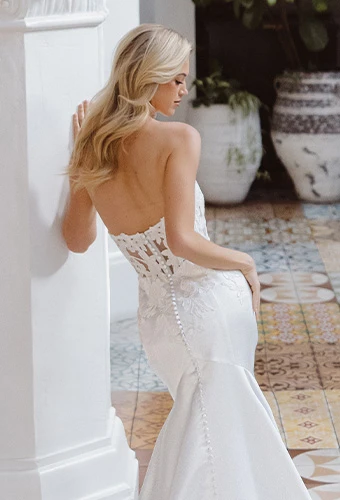
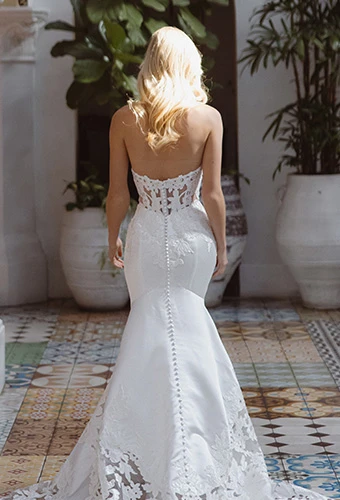
Fine-scale details can help preserve an elongated visual line. Consider:
- A concealed zipper
- Small fabric-covered buttons
- Narrow corset ribbon
- Closures that do not visually divide the bodice
A row of buttons continuing into the train can also draw the eye vertically.
Wedding Dress Closures for Boho Brides
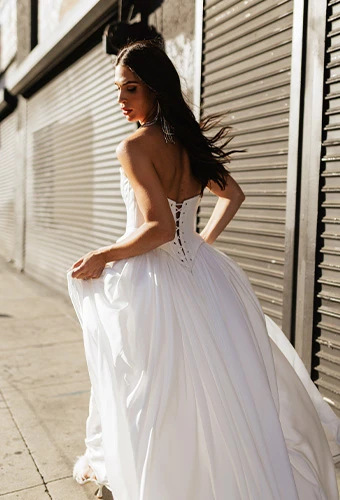
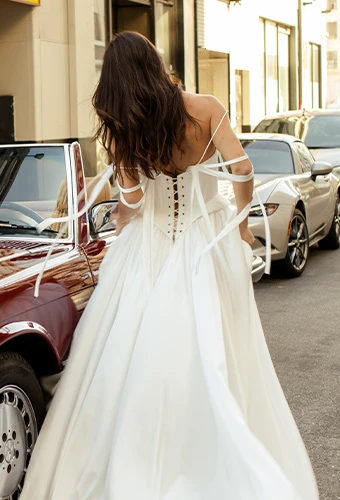
Soft corset lacing, delicate loops and floral lace details naturally complement a bohemian bridal look.
Pair the closure with a relaxed A-line skirt, flowing fabric and an undone updo or soft waves.
Wedding Dress Closures for Minimalist Brides
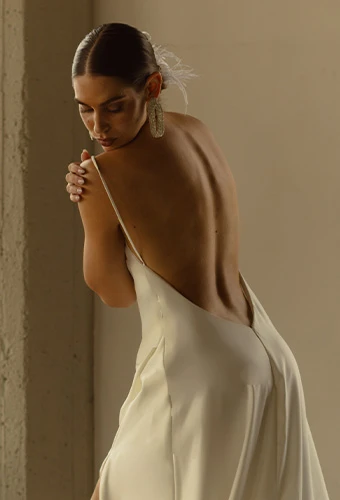
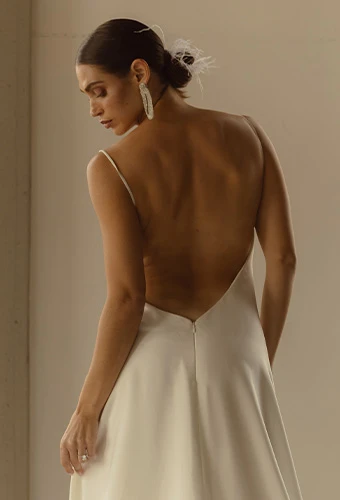
A concealed zipper is a natural match for clean lines and understated fabric. Subtle covered buttons can also add dimension while keeping the look polished.
For the most seamless effect, choose buttons in the same fabric and color as the dress.
Closures for Brides With Mobility or Dexterity Considerations
Consider how much assistance each closure requires.
A zipper is generally the fastest to secure. Small working buttons or elaborate corset lacing may require more time and hand strength from the person helping you.
Talk openly with your stylist about comfort, accessibility and the level of assistance available on the wedding day.
Which Closure Is Best for Your Wedding Venue?
Your venue does not determine your dress, but it can influence which closure feels most practical on the wedding day.
| Wedding Venue | Recommended Closure | Why It Works | Planning Tip |
| Outdoor wedding | Zipper or simple button closure | These options are generally easier to manage in spaces with limited room, uneven lighting or changing temperatures. | Choose a closure your helper can fasten confidently and allow extra time so no one feels rushed. |
| Destination wedding | Zipper or a familiar, easy-to-manage corset | A straightforward closure can simplify getting ready away from home, especially without professional dressing assistance. | Pack a crochet hook, button tool and small emergency sewing kit in your carry-on luggage. |
| Formal indoor wedding | Corset back or extended button detail | Dramatic lacing and long rows of buttons can add visual impact in ballrooms, estates and grand ceremony spaces. | Consider a hairstyle that reveals the back detail and allows it to shine in aisle and staircase photos. |
| Beach wedding | Concealed zipper or short row of buttons | A quick, uncomplicated closure suits warm temperatures, lightweight fabrics and compact dressing spaces. | Keep the fastening process efficient and choose helpers who can handle the gown without touching the fabric unnecessarily. |
| Garden or romantic estate wedding | Corset back or fabric-covered buttons | These closures complement lace, flowing skirts and soft, romantic bridal styling. | Allow enough time for careful lacing or buttoning, especially when the gown includes delicate loops or appliqués. |
Can a Wedding Dress Closure Be Changed?
In some cases, a wedding dress closure can be altered. A zipper may be converted into a corset back, or decorative buttons may be added over an existing closure.
However, not every change is possible or advisable.
An alterations professional will need to consider:
- The gown’s bodice structure
- Available seam allowance
- Fabric type
- Lace and embellishment placement
- Boning and internal support
- The amount of size adjustment needed
- The original designer construction
Changing a closure may affect the shape, support and appearance of the bodice. If a specific alteration is essential to your vision, speak with an experienced bridal alterations professional before purchasing the gown.
Wedding-Morning Closure Checklist
A little preparation can help your gown come together beautifully.
- Practice fastening the dress before the wedding.
- Choose one or two trusted helpers.
- Record any lacing or fastening instructions.
- Allow additional time for corsets and functional buttons.
- Pack a crochet hook or bridal button tool.
- Keep hands clean before handling ribbon, lace or fabric.
- Fasten the gown gradually and evenly.
- Check that every hook, loop and zipper is secure.
- Sit, breathe and move before leaving the room.
- Keep an emergency sewing kit nearby.
Once the gown is fastened, take a moment. This is more than a final styling step it is the moment your complete bridal look comes to life.
Find the Wedding Dress Closure That Feels True to You
The right closure should complement the gown while helping you feel comfortable, supported and confident. A smooth zipper may suit your love of modern simplicity. A corset back may give you the romantic structure you have been dreaming about. A graceful line of buttons may add the timeless detail that makes the whole look feel truly yours.
The best way to understand the difference is to experience each option in person. Your True Crew stylist can help you compare closures, explore designer gowns and find a fit that feels beautiful from every angle.
Ready to discover which wedding dress closure feels true to you? Find your nearest True Society bridal shop and book an appointment for a wedding dress shopping experience designed around your style, your story and your grandest entrance.
Gown availability and customization options vary by True Society location.
Frequently Asked Questions About Wedding Dress Closures
What is the most adjustable wedding dress closure?
A corset or lace-up back typically offers the most adjustability because the lacing can be tightened or loosened through the bodice.
Are wedding dress buttons functional?
Some wedding dress buttons are functional and fasten through loops. Others are decorative and cover a concealed zipper.
Is a corset-back wedding dress more supportive?
A corset back may provide adjustable support, but support also depends on the gown’s internal construction, boning, cups and professional fit.
Can a zipper wedding dress be converted to a corset back?
Sometimes. An experienced bridal alterations professional must evaluate the bodice, fabric, support structure and available seam allowance.
How long does it take to lace a corset wedding dress?
A corset usually takes longer to secure than a zipper. The exact timing depends on the number of loops and the experience of the person helping. Practice beforehand and build extra time into the wedding-morning schedule.
How do you fasten small wedding dress buttons?
Use a crochet hook or bridal button tool to pull each loop carefully over its button. Work slowly to avoid stretching the loops or snagging the fabric.
Which wedding dress closure is easiest to fasten?
A zipper is generally the quickest and easiest closure, especially when it is secured by a hook-and-eye fastener at the top.
Can a wedding dress have both buttons and a zipper?
Yes. Many wedding dresses use a concealed zipper for function and fabric-covered buttons for decorative detail.