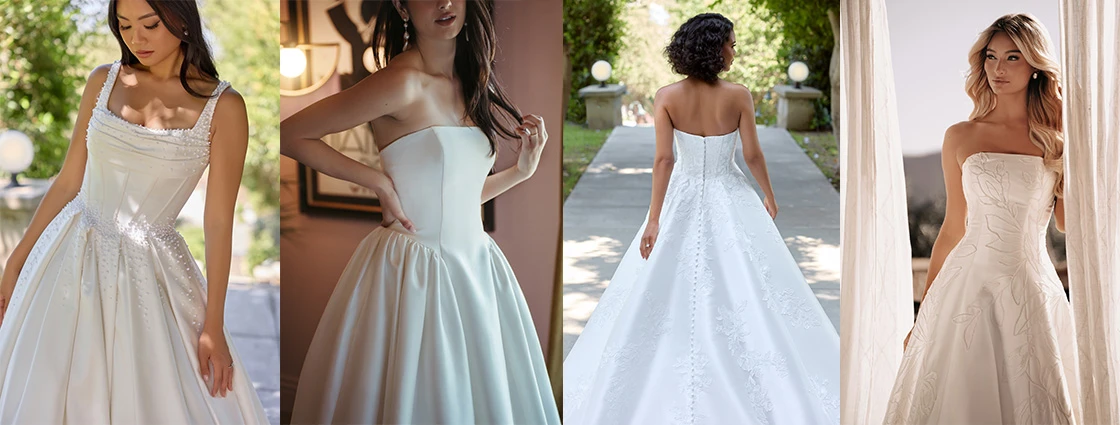
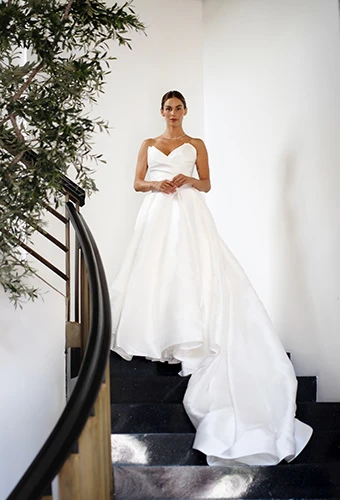
Mikado wedding dress fabric is a tightly woven structured material with a smooth surface and a soft, subtle sheen. It’s the fabric behind some of bridal’s most sculptural silhouettes: clean A-lines, regal ballgowns, sharp fit-and-flares and overskirts that make an entrance all their own.
Where other fabrics flow, Mikado holds. Pleats stay crisp. Seams stay defined. A full skirt keeps its shape from the first look to the last dance. It’s polished and luxe.
Wondering whether that sculpted, hold-its-shape look is right for you? This guide walks through what Mikado is made of, how it behaves from the fitting room to the dance floor, which silhouettes and settings suit it and what to ask at your appointment.
Still comparing options? Start with our Wedding Dress Fabrics Guide for a side-by-side look at Mikado, satin, crepe, tulle, lace and more. Then come back here for your Mikado deep dive.
Mikado Wedding Dress Fabric at a Glance
| Quick Facts | What to Know |
| Feel | Smooth and substantial, from crisp to soft depending on the type |
| Weight | Medium-heavy to heavy |
| Finish | Subtle sheen, softer than high-gloss satin |
| Drape | Holds its shape instead of flowing |
| Best silhouettes | A-line, ballgown, fit-and-flare, overskirts |
| Pairs well with | Lace appliques, pearls, beading, bows, pleats |
| Best seasons | Fall, winter and formal indoor weddings, with strapless or sleeveless styles for warmer climates |
What Is Mikado Wedding Dress Fabric?
Mikado is a smooth, heavyweight woven fabric. In bridal, it’s traditionally made from silk or a blend of silk and synthetic fibers, and polyester versions are common too. Visually, it resembles satin, but the material is firmer, stiffer and holds its own structural shape rather than slouching, sagging or draping softly.
The name comes from the Japanese word for emperor. How the fabric earned it is a story with plenty of versions, but the regal reputation certainly stuck.
What really defines Mikado is structure. Think of it as the architect of the bridal fabric world: it creates shape rather than simply following it.
What Is Mikado Made Of?
The fiber content changes how a Mikado gown looks, feels and is priced, so it’s worth asking about.
| Type | What Is Is | What to Expect |
| Silk Mikado | Woven from silk | Prized for its depth, refined surface and luxe feel; often at the higher end |
| Silk-blend Mikado | Silk combined with synthetic fibers | Keeps a polished look with added durability |
| Polyester Mikado | Woven from polyester fibers | A structured, accessible option with a sleek finish |
Not sure which one your gown uses? Your True Crew stylist can check the designer’s fabric details for the exact style you’re trying on.
Types of Mikado Wedding Dress Fabric
Fiber tells you what a fabric is made of. The type of Mikado tells you how it looks and feels. Designers create several distinct types, each with its own weight, texture and finish.
| Mikado Type | What Makes It Different | Often Chosen For |
| Matte Mikado | Crisp, structured, understated | Architectural silhouettes, defined pleating, sculptural designs |
| Brushed Mikado | Thicker, softer, substantial | Volume and shape with a softer hand |
| Soft Mikado | Lightweight, flexible, fluid | Softly sculpted silhouettes and effortless designs |
| Shell Mikado | Smooth, polished, luminous | Polished silhouettes with subtle luminosity |
| Pearl Mikado | Pearlescent, flowing, delicate | Romantic looks with understated radiance |
Matte Mikado Wedding Dresses
Matte Mikado is a densely woven fabric with a subtle twill texture and a crisp, structured look and feel. Its smooth surface and minimal reflective sheen create a clean, modern appearance. The fabric holds its shape beautifully, making it ideal for architectural silhouettes, defined pleating and sculptural bridal designs.
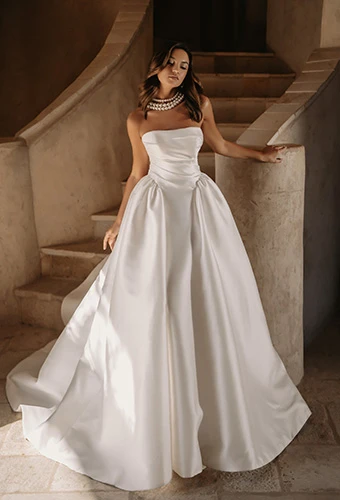
See matte Mikado in Martina Liana Style ML2065, a strapless ballgown with a wrapped bodice and asymmetric pleating.
Brushed Mikado Wedding Dresses
Brushed Mikado offers a richer, softer interpretation of traditional Mikado. Distinguished by its fuller body and smooth, brushed surface, it has a substantial yet soft hand that feels less crisp than matte Mikado. Its subtle, diffused luster gently catches the light, while its structured drape provides beautiful volume and shape. The result is a luxurious fabric that balances softness with sculptural elegance.
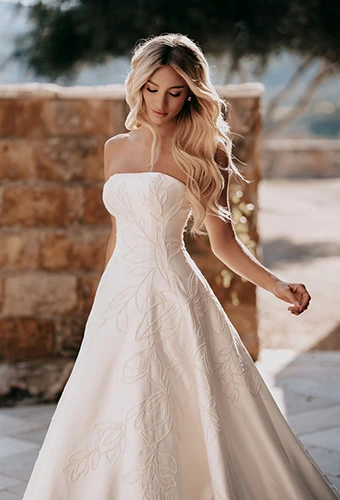
See it in Martina Liana Style ML2062, a strapless A-line with a sculpted corset bodice and optional embossed floral motifs. It’s also available in plus sizes.
Soft Mikado Wedding Dresses
Soft Mikado is a lighter, more fluid interpretation of traditional Mikado. It’s fine twill weave creates a subtle surface texture, while its softer, more flexible feel allows for graceful movement without sacrificing shape. Combining gentle structure with an airy drape, it is particularly suited to softly sculpted silhouettes and effortless bridal designs.
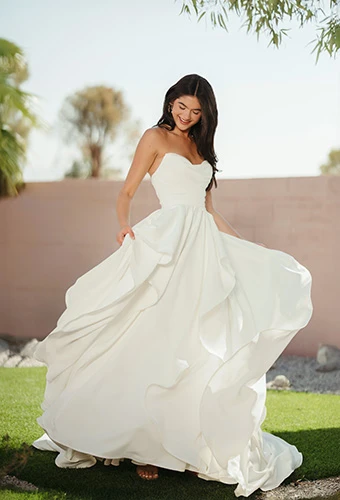
See it in Stella York Style SY8212, a sleek strapless A-line with a ruched bodice and soft ruffle pick-ups, also available in plus sizes.
Shell Mikado Wedding Dresses
Shell Mikado is distinguished by its beautifully smooth surface and delicate, light-reflective sheen. Its refined twill weave creates a lustrous finish, lending the fabric a soft, glazed appearance. With its combination of body and graceful drape, shell Mikado creates polished silhouettes with subtle luminosity.
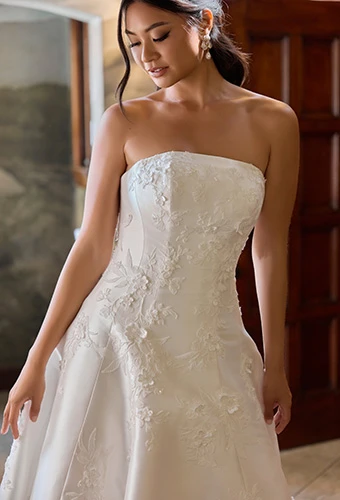
See it in Essense of Australia Style D4479, a strapless A-line with a princess-inspired full skirt and gentle hip volume. It comes with or without lace and is also available in plus sizes.
Pearl Mikado Wedding Dresses
Pearl Mikado features a fine, delicate twill weave and a softly luminous surface with a distinctive pearlescent effect. Its gentle, flowing drape creates elegant movement, while its subtle pearl-like sheen catches the light with a refined glow. The result is a romantic interpretation of Mikado that balances understated radiance with fluid sophistication.
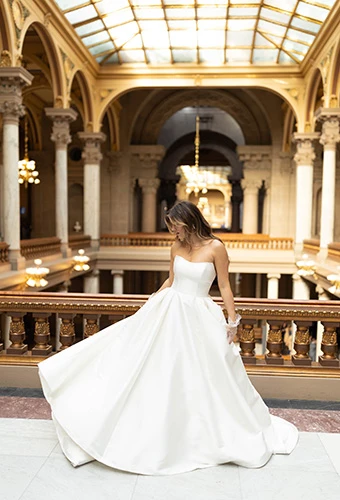
See it in Stella York Style 7711, a strapless princess ballgown with pockets and a detachable oversized bow. It’s also available in plus sizes.
What Does Mikado Feel Like?
Picture a fabric with presence. Classic Mikado feels smooth to the touch, with a supportive weight and a crisp body that doesn’t collapse against the skin. Rather than pooling or clinging, it creates a clean outline around you.
That structure is why a Mikado gown can feel secure and put-together from the moment you step into it. Some brides love the sense of support. Others are surprised by how substantial it is. And because two gowns labeled “Mikado” can feel noticeably different, fabric is so much easier to understand in person than on a hanger.
True Crew Tip: Don’t just look in the mirror. Walk, sit, turn and take a few steps with the skirt. With structured fabric, how the gown moves with you matters as much as how it looks standing still.
Why Do Brides Love Mikado Wedding Dresses?
- Sculptural shape: Mikado supports pleats, seams and full skirts so the design stays crisp.
- Polished finish: Its soft sheen has a refined glow without looking overly glossy.
- Clean canvas: It lets necklines, buttons, bows and seaming take center stage.
- Photo-ready structure: A gown that holds its shape tends to look consistent in photos from ceremony to reception.
- Embellishment-friendly: Lace, pearls, beading and 3D details sit beautifully against a smooth, structured base.
- Timeless feel: Mikado reads classic and modern all at once, so it rarely feels tied to a trend.
Which Wedding Dress Silhouettes Look Best in Mikado?
Because Mikado holds its shape, the silhouette does a lot of the talking. Here’s how it shows up across popular silhouettes.
Mikado A-Line Wedding Dresses
An A-line gives Mikado room to do what it does best: define the waist, then flow into a smooth, structured skirt. The result is clean, classic and quietly confident.
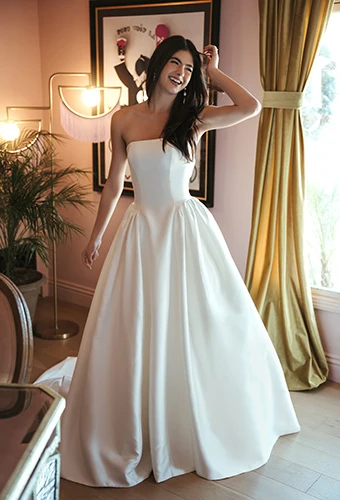
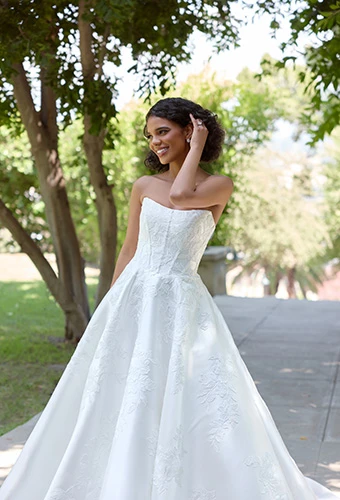
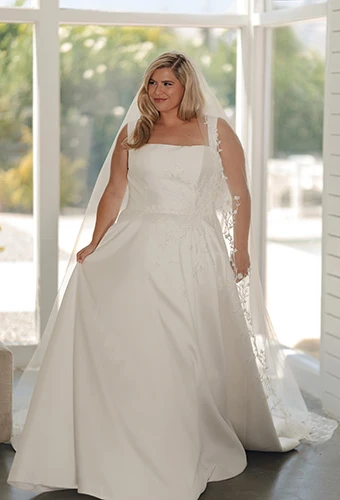
If you love a timeless look that still feels wearable, a Mikado A-line gown is an excellent place to start. Pair it with a sleek updo and a simple veil to let the neckline lead.
Mikado Ballgown Wedding Dresses
For brides who want drama, Mikado ballgowns deliver volume with intention. The fabric supports full skirts and crisp pleating, creating a regal shape that feels refined rather than overwhelming.
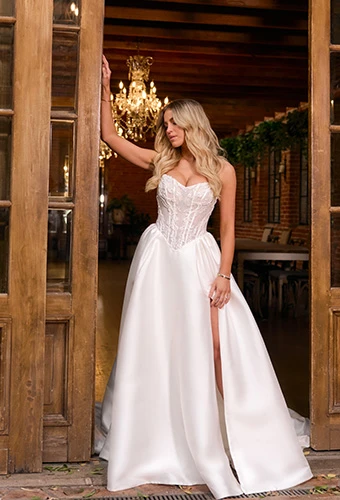
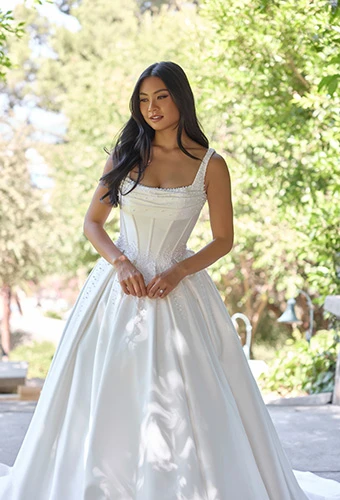
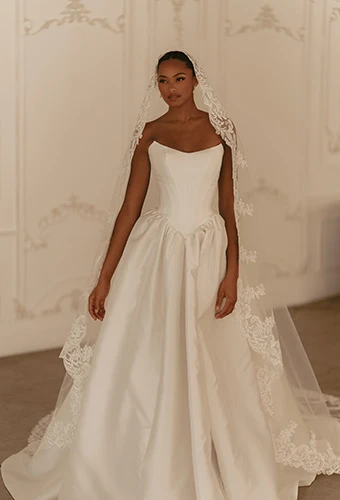
Cathedral veil, long gloves, statement earrings: a Mikado ballgown can handle every bit of it. Wondering how a fuller skirt compares with tulle? Our tulle wedding dress guide breaks down the airier alternative.
Mikado Fit-and-Flare Wedding Dresses
On a fit-and-flare, Mikado sculpts through the bodice and hips before releasing into a structured skirt. It’s definition and drama in one.
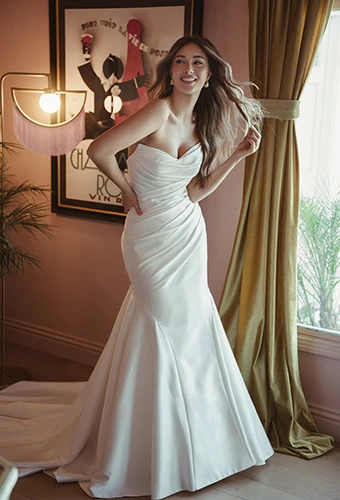
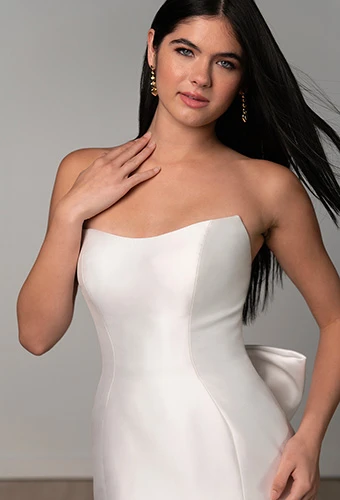
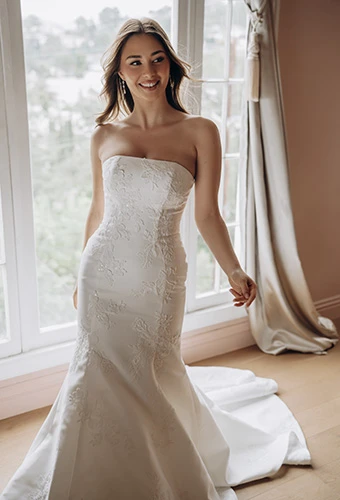
Look for seams, pleating or draping that follow your shape, and notice where the skirt begins to open. A fit-and-flare can change personality depending on where the flare starts.
Mikado Wedding Dresses with Overskirts
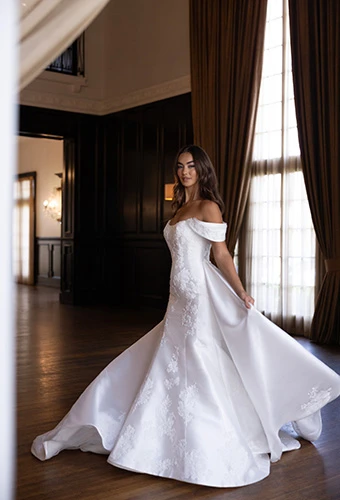
Mikado’s structure makes it especially good at overskirts. A detachable layer holds its shape instead of collapsing, so you can arrive with full volume for the ceremony and reveal a sleeker silhouette for the reception.
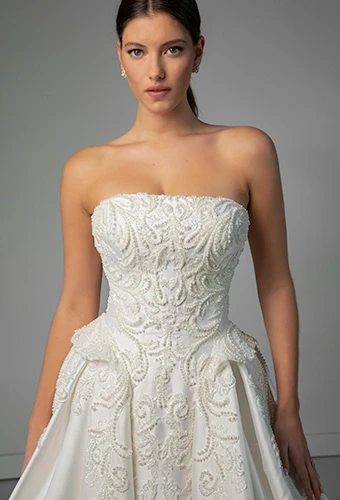
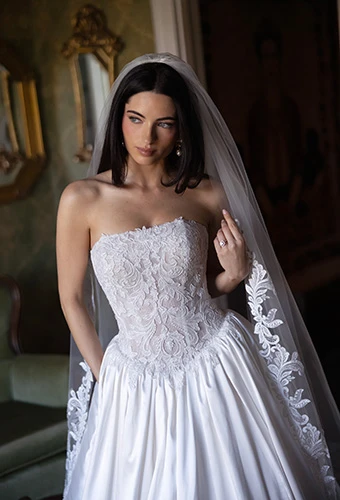
Can Mikado Wedding Dresses Be Detailed?
Mikado often gets labeled a minimalist fabric, but it’s more versatile than that. Its smooth surface creates contrast that makes lace appliqués, beading, pearls, bows and dimensional details stand out, and its structure supports intricate craftsmanship with a clean finish.
Want the simplest versions? Explore our simple wedding dresses to see how clean lines and thoughtful details work together.
Who Can Wear a Mikado Wedding Dress?
Anyone. Mikado is a fabric, not a body-type rule. What matters is how the silhouette, bodice construction and skirt shape come together on you, and how you feel in the gown.
Mikado Wedding Dresses for Plus-Size Brides
Mikado’s firm body can give a gown a smooth, polished line, and many structured styles include internal support like boning or a built-in corset. For plus size brides, the questions that matter most are about construction: how the bodice is supported, how the skirt is shaped and how the gown feels when you sit, reach and dance.
Mikado is offered in plus sizes across several of our designers, so you can compare ballgowns, A-lines and fit-and-flares in your own size instead of imagining them. Explore our plus-size wedding dress collection and ask your True Crew stylist to pull a few different styles.
Mikado Wedding Dresses for Petite Brides
Because a Mikado skirt can carry real volume, proportion deserves a little attention. A waistline that sits where you want it, a skirt that opens at a comfortable point and a train you can manage will keep a structured gown feeling balanced. A slim A-line or fit-and-flare is an easy first try. Then try a fuller skirt back-to-back and notice how each one moves.
Mikado Wedding Dresses for Minimalist Brides
If your inspiration board is filled with square necklines, sculpted seams and almost no embellishment, Mikado may feel like home. With fewer decorative elements, details like pleating, buttons, bows and the shape of the skirt become the design. And minimal doesn’t have to mean one-note. Look at how the skirt falls, where the seams land and what happens at the back.
Mikado vs. Satin: What’s the Difference?
They look similar in photos, but they behave differently.
Satin has a glossy face and a fluid drape that tends to pour over the body and catch the light. Mikado is heavier and crisper, with a quieter sheen, and it stands away from the body to create its own shape. Think of satin as the fabric that follows the figure and Mikado as the one that sculpts around it.
Neither is better. A satin gown might feel like old Hollywood glamour, while a Mikado gown reads as sculptural and modern.
Mikado vs. Crepe vs. Satin at a Glance
| Fabric | Finish | Structure | Best For |
| Mikado | Subtle sheen; matte to pearlescent depending on type | High; holds shape (softer in soft and pearl Mikado) | Sculptural A-lines, ballgowns, overskirts |
| Crepe | Matte, textured | Low to medium; fluid or stretch | Sleek columns and body-skimming silhouettes |
| Satin | Glossy, luminous | Medium; drapes | Polished, formal gowns with fluid movement |
Leaning toward something softer and body-skimming? Read our crepe wedding dress guide. Want to compare them all? Our Wedding Dress Fabrics Guide has you covered.
Does Mikado Wedding Dress Fabric Wrinkle Easily?
Mikado is known for resisting everyday wrinkling, which is one reason it holds a polished look through a long wedding day. That said, a crisp fabric can hold on to a crease if one sets, so how you store and transport your gown matters.
- Follow the care instructions for your specific gown.
- Use the garment bag your boutique recommends and avoid compressing the skirt.
- Ask your salon or alterations professional how to handle steaming for your fabric.
- Skip DIY ironing and household stain treatments.
- Consider professional cleaning and gown preservation after the wedding.
Is Mikado Too Heavy or Hot to Wear?
Mikado is a heavier fabric, and the finished weight depends on the whole gown: skirt volume, lining, train length and embellishment. A strapless A-line behaves very differently from a long-sleeve ballgown. Lighter types, like soft Mikado and pearl Mikado, can also feel less substantial than classic matte or brushed Mikado.
Mikado is a natural fit for fall, winter and formal indoor weddings. It can still work for warmer weather, particularly in strapless or sleeveless styles and air-conditioned venues. If you’re planning an outdoor summer wedding, tell your True Crew stylist so they can help you compare constructions and find the lighter-feeling options.
How Do You Style a Mikado Wedding Dress?
Mikado gives you a polished base, so your accessories can set the mood.
| Bridal Style | Styling Ideas | Why It Works |
| Modern | Sleek bun or low ponytail, sculptural earrings, simple veil | Streamlined details echo the gowns clean lines |
| Classic | Pearl jewelry, a chapel or cathedral veil, soft waves | Pearls and Mikado are a timeless pairing |
| Romantic | Lace-trimmed veil, loose waves, delicate jewelry | Soft textures contrast with the structure |
| Glamorous | Crystal earrings, long gloves, statement heels | Mikado holds the focus while accessories add sparkle |
Questions to Ask When Trying On a Mikado Wedding Dress
Once a gown has your attention, these questions help you understand exactly what you’re getting:
- Is this Mikado silk, a silk blend or polyester, and which type is it?
- What gives the gown its structure: the fabric itself, a lining, boning or a corset?
- How heavy does it feel with the full skirt and train?
- How does the bodice support me when I sit and move?
- What bustle options does this train have?
- Does this style offer a detachable overskirt, sleeves or other add-ons?
- What’s the best way to protect this gown between fittings and the wedding day?
- Is it available in my size, including plus sizes?
How to Choose the Right Mikado Wedding Dress
Because Mikado is structured, a few simple tests tell you a lot.
- Sit down and notice whether the bodice and skirt let you relax.
- Lift your arms, reach forward and give someone a hug.
- Walk a few steps and turn to see how the skirt and train travel.
- Check the back and side views, not just the front.
- Step toward natural light if you can, since Mikado’s sheen reads differently in daylight.
- Try two types of Mikado back-to-back so the differences in weight and finish are easy to feel.
- Try Mikado next to satin or crepe in a similar silhouette.
- Picture your venue, your season and the moment you’ll need to bustle.
Find a Mikado Wedding Dress That Feels True to You
Mikado wedding dress fabric brings together structure, polish and quiet luxury. It can sculpt a clean A-line, build a full ballgown, support an overskirt or give lace and pearls a perfect backdrop.
But the best fabric isn’t the one that looks good on a hanger. It’s the one that makes you feel like yourself.
Find a True Society bridal shop near you and book an appointment. Try Mikado with our True Crew and discover the gown that feels true to you.
Mikado Wedding Dress FAQs
Is Mikado a good fabric for a wedding dress?
Yes. Mikado is a structured, polished wedding dress fabric that holds its shape beautifully, making it ideal for A-lines, ballgowns, fit-and-flares and gowns with overskirts.
What are the different types of Mikado?
Designers offer five main types: matte Mikado (crisp and understated), brushed Mikado (thicker and softer), soft Mikado (lightweight and fluid), shell Mikado (smooth and luminous) and pearl Mikado (pearlescent and flowing).
What is Mikado fabric made of?
Mikado is traditionally made from silk or a blend of silk and synthetic fibers, and polyester Mikado is also common. Ask your stylist for the fiber content of a specific gown.
What is the difference between Mikado and satin?
Both can look smooth and elegant, but satin is typically glossier and drapes more fluidly, while Mikado is heavier, crisper and more structured with a subtler sheen.
Does Mikado wrinkle easily?
Mikado is known for resisting everyday wrinkles, but any structured fabric can hold a crease once one sets. Follow your gown’s care instructions and ask your boutique about steaming.
Is Mikado stretchy?
Mikado is a structured fabric and generally doesn’t have the give of stretch crepe. If flexibility matters to you, ask your stylist about the bodice construction and fit.
Can Mikado wedding dresses have lace or beading?
Yes. Mikado is a refined base for lace appliqués, pearls, beading, bows and 3D details.
Is Mikado comfortable to wear all day?
Many brides find a well-constructed Mikado gown comfortable and supportive. Comfort depends on the lining, boning, skirt weight and train, so walk, sit and move during your appointment.
