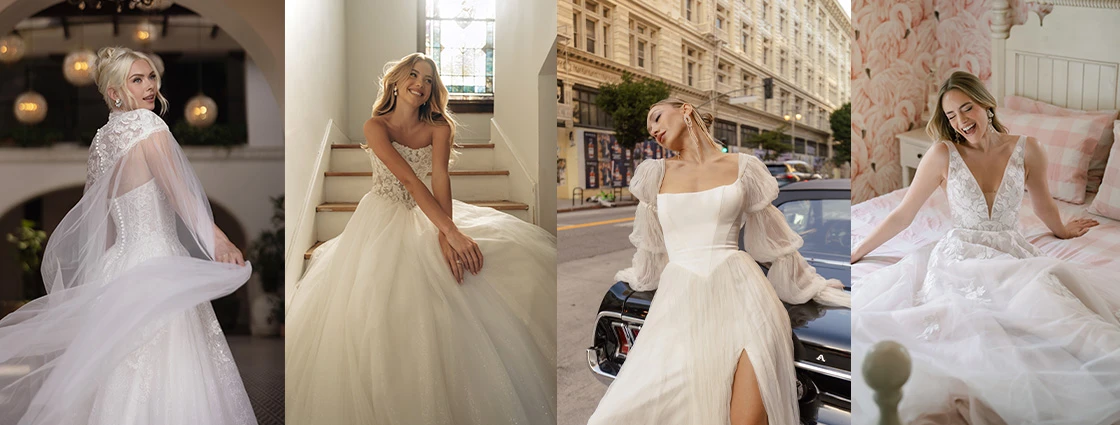
Dreamy, dimensional and made for a little drama, tulle wedding dress fabric has a way of making a gown feel instantly bridal. It can float through an airy A-line, build the kind of ballgown volume made for a grand entrance or catch the light beneath lace, florals and sparkle with every step.
But here’s the thing: not all tulle is created equal. Tulle is a fine, sheer net fabric that designers layer to create softness, volume and dimension in wedding dresses, and the way it looks and feels can change completely depending on the construction, number of layers, lining and embellishments.
So, if a tulle wedding dress is already living rent-free on your bridal Pinterest board, consider this your guide. We’re breaking down the different types of tulle wedding dresses, how the fabric moves, which silhouettes make it shine and what to look for when you finally get to try one on.
Still exploring your fabric options? Start with our Wedding Dress Fabrics Guide: How to Choose the Most Flattering Fabric for a look at tulle, lace, satin, crepe, chiffon, Mikado and more. Then come back here for your tulle deep dive.
What Is Tulle Wedding Dress Fabric?
You know that light-as-air, almost cloudlike fabric you’ve seen floating down the aisle? There’s a good chance it’s tulle.
Tulle is a lightweight netting with a sheer appearance and fine, open structure. In bridal fashion, designers use it everywhere: skirts, overlays, sleeves, trains, veils and those barely-there illusion details that seem to make lace float against the skin.
Its superpower is layering. A few soft layers can create effortless movement, while more structured layers can build major volume for a statement tulle ballgown wedding dress. Add lace appliqués, dimensional flowers, beading or sparkle between those layers, and suddenly the fabric has depth, texture and a little bit of magic.
Translation? Two tulle wedding gowns can share the same fabric family and still have completely different personalities.
What Does Tulle Feel Like on a Wedding Dress?
There’s no single answer, which is exactly why trying on tulle is part of the fun. Some tulle feels incredibly soft and fluid, creating that float-across-the-room movement. Other varieties have more structure, helping a skirt hold its shape and deliver serious volume.
The finishing details matter, too. Glitter, lace, beading and three-dimensional appliqués can add texture, while the gown’s lining is what typically determines how the dress feels against your skin.
And don’t judge a gown by the hanger. A dress that looks wonderfully dramatic online might feel surprisingly light once you step into it, while another may have more layers and structure than you expected.
True Crew Tip: Don’t just stand in front of the mirror. Walk. Sit. Turn. Give the skirt a little swish. The right gown should look incredible in the fitting room and feel just as good when you imagine wearing it all day.
What Are the Different Types of Tulle Wedding Dresses?
“Tulle wedding dress” covers a lot of gorgeous territory. From barely-there softness to all-out sparkle, here are a few of the ways this fabric can show up in your bridal look.
Soft Tulle Wedding Dresses
If your bridal mood board says effortless romance, meet soft tulle. A soft tulle wedding dress brings dreamy movement without relying on a highly structured skirt, making it especially beautiful on flowing A-line silhouettes and gowns designed to move with you.
Pair it with delicate lace, subtle embellishments and relaxed styling for a look that feels romantic without trying too hard. Loose waves, a softly textured updo and simple jewelry? Consider the vibe complete.
Sparkle or Glitter Tulle Wedding Dresses
For brides who believe a little sparkle is never a bad idea, glitter tulle delivers. A sparkle tulle wedding dress catches the light throughout the skirt, adding shimmer that comes alive as you move.
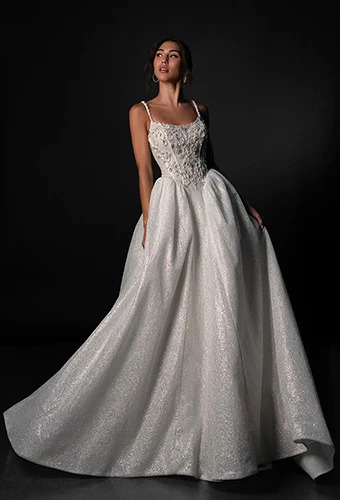
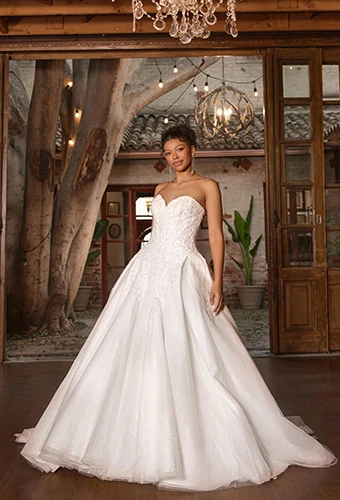
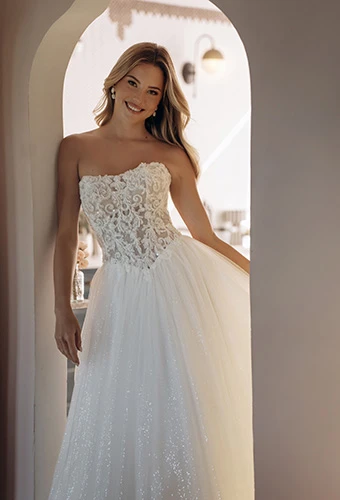
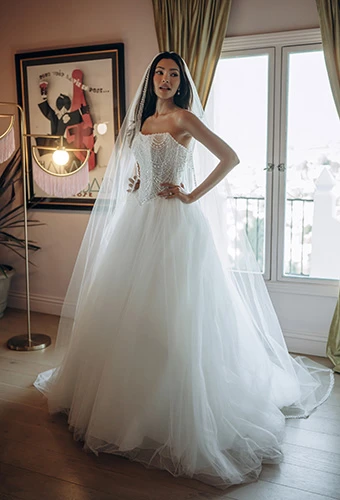
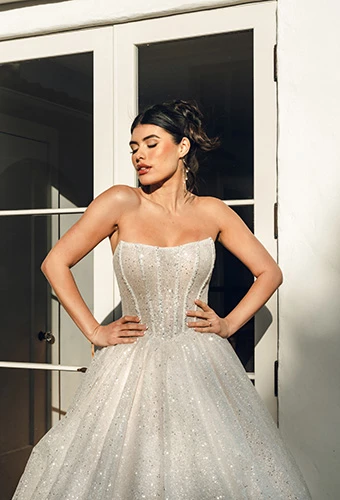
Stella York Style SY8301 shows exactly what we mean. The strapless ballgown pairs a structured, corset-inspired bodice and floral lace with voluminous layers of glittering tulle. Prefer the silhouette with a softer finish? A non-glitter tulle underlay is also available, giving you two distinct takes on the same statement shape.
When the gown is already bringing the glow, keep accessories intentional and let the fabric have its moment.
Lace and Tulle Wedding Dresses
Name a more iconic bridal duo. Lace and tulle wedding dresses work so beautifully because sheer tulle lets lace motifs and appliqués appear dimensional, almost as if they’re floating across the gown.
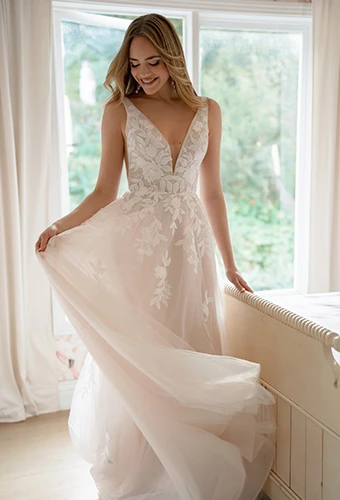
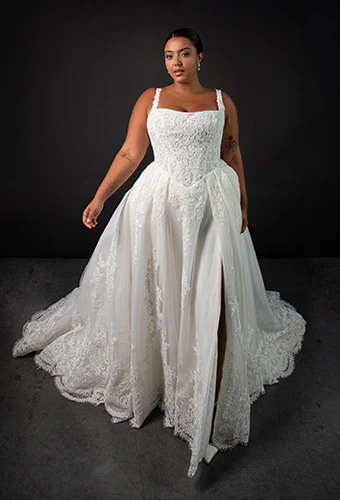
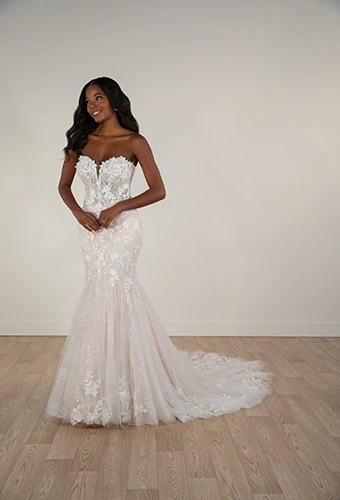
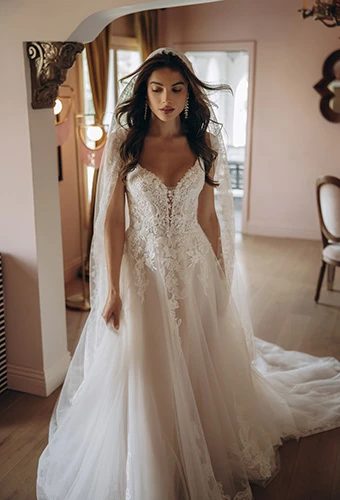
Stella York Style 7924 takes the pairing in a glamorous direction. Floral lace and three-dimensional floral accents decorate the fitted silhouette before flowing into voluminous layers of sparkle tulle through the lower skirt and train.
And if you thought tulle automatically meant princess ballgown, this look is your reminder to think again.
Illusion Tulle Wedding Dresses
Sometimes the most impressive tulle is the kind you barely notice. Fine illusion tulle is often used around plunging necklines, bodices, backs and cutouts to support intricate lace placement or sheer design details while keeping the look beautifully light.
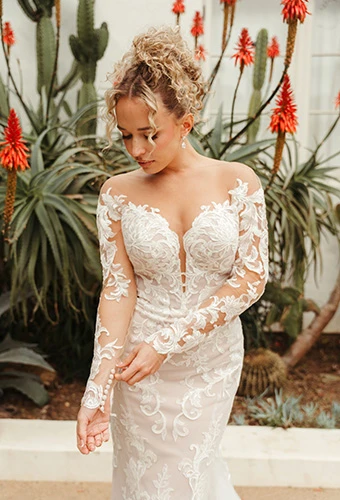
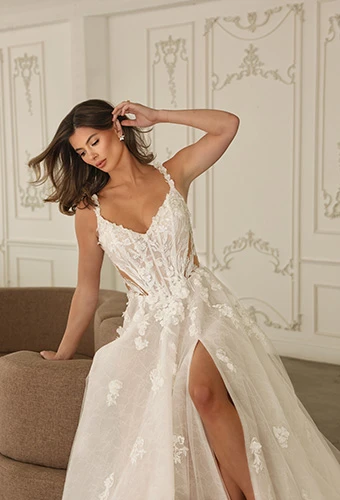
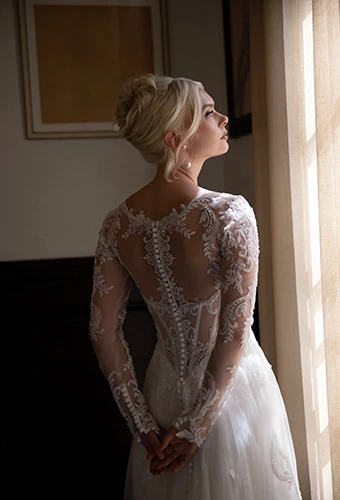
When you try on an illusion tulle wedding dress, look at the gown from every angle and notice how the shade blends with your skin. The goal is for those intricate details to get all the attention.
Shimmer Tulle Wedding Dresses
Want glow without going full glitter? Shimmer tulle brings a softer wash of light to a bridal look, giving the fabric an almost luminous finish as it moves.
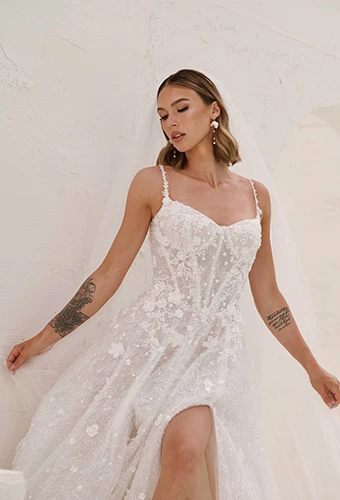
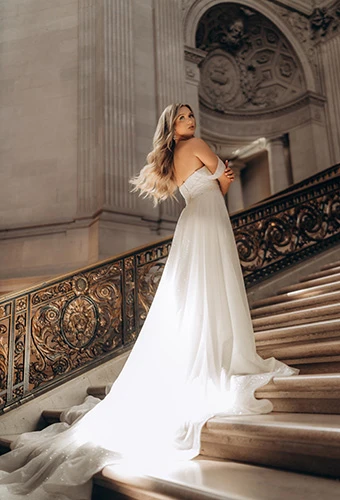
Stella York Style 7815 is crafted in all-over shimmer tulle with a fitted silhouette and an optional detachable tulle overskirt. Add the overskirt for extra volume and drama, then remove it later for a second look without a second dress. We love a bridal plot twist.
How Does Tulle Change a Wedding Dress Silhouette?
Tulle can whisper or make an entrance. Because designers can play with softness, structure and layering, the same fabric can create everything from a breezy A-line to a full, fashion-forward ballgown.
Tulle A-Line Wedding Dresses
An A-line gives tulle room to do what it does best: move. The silhouette stays defined through the waist before opening into layers that can feel soft and romantic, sparkling and glamorous or somewhere beautifully in between.
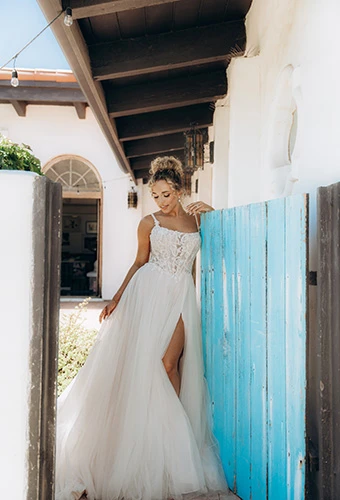
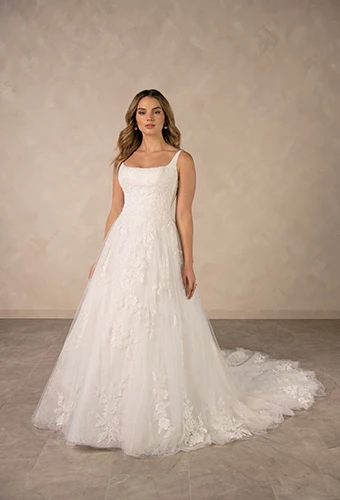
Stella York Style 8042 is a beautiful example. Its soft A-line skirt features layers of optional glitter tulle, paired with sparkling lace and a modern scoop neckline. The result is classic romance with plenty of movement and just the right amount of shine.
Tulle Ballgown Wedding Dresses
This is tulle in main-character mode. Multiple layers can build breathtaking volume and dramatic movement, making a tulle ballgown wedding dress a natural choice if your aisle vision includes a truly unforgettable entrance.
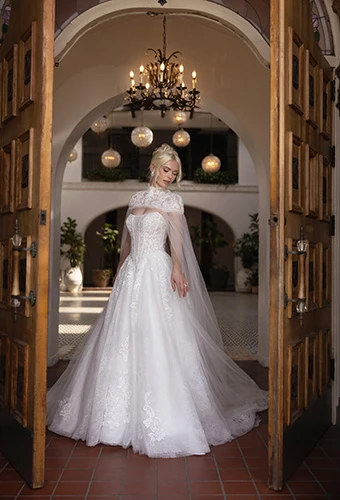
Essense of Australia D4553 is tulle in main-character mode. Multiple layers can build breathtaking volume and dramatic movement, making a tulle ballgown wedding dress a natural choice if your aisle vision includes a truly unforgettable entrance.
Tulle Fit-and-Flare Wedding Dresses
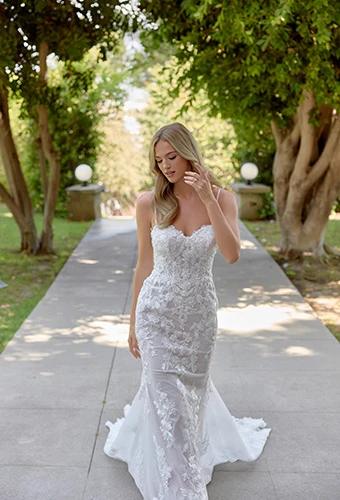
Plot twist: tulle doesn’t need a full skirt to make an impact. On a fit-and-flare silhouette, like Essense of Australia D4344, the fabric can follow the body before opening into softer layers around the thigh, lower skirt or train, combining definition with the movement tulle is known for.
Tulle Wedding Dresses with Overskirts
One gown, two moods. A detachable tulle overskirt can completely transform a silhouette, adding fullness and drama for the ceremony before coming off to reveal a more fitted look underneath.
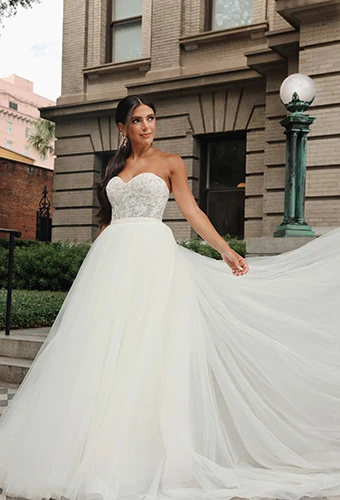
If you love the idea of a reveal between “I do” and the dance floor, an overskirt is absolutely worth trying during your appointment. Try Essense of Australia D4133 for your perfect two-in-one bridal look.
Can Plus-Size Brides Wear Tulle Wedding Dresses?
Absolutely. Tulle is a fabric, not a body-type rule.
What matters more is how the silhouette, layering and bodice construction come together on your body and, most importantly, how you feel in the gown.
A structured bodice with a tulle A-line skirt creates one effect. A tulle fit-and-flare creates another. A full ballgown brings a completely different kind of drama.
Several True Society tulle styles are available in plus sizes, including Stella York Style SY8301, while Style 8042 also has a dedicated plus-size version.
Forget the idea that you need to rule a fabric in or out because of size. Start with the shape, support and details you love, and let your fitting-room favorites surprise you.
Can Petite Brides Wear Tulle?
Yes! Soft, airy, voluminous, sparkling, all of it. For petite brides, proportion matters more than a blanket rule about fabric. A defined waist and thoughtfully placed skirt can create beautiful balance, while softer layers can give you the dreamy tulle effect with less visual volume.
Our favorite advice? Try the gown you expect to love, then try one you never would have picked from the hanger. Tulle can look completely different once it’s moving with you.
Can Tulle Work for a Boho Bridal Look?
Tulle may be famous for ballgowns, but it has a free-spirited side, too. Look for softer tulle paired with organic floral lace, relaxed silhouettes or nature-inspired appliqués for a bridal look that feels dreamy without feeling overly formal.
Finish it with loose waves, a textured updo or delicate botanical accessories. The result? Romantic, effortless and entirely your own.
Is Tulle Comfortable to Wear?
Comfort comes down to the whole gown, not just the word “tulle” on the fabric list. When you’re trying on dresses, pay attention to:
- How many layers make up the skirt
- Whether the bodice is lined or unlined
- Where embellishments sit against the body
- How much structure is built into the bodice
- The length and weight of the train
- How the gown feels while sitting, walking and dancing
Two tulle gowns can look equally airy and feel completely different once you put them on.
If comfort is high on your list, tell your True Crew stylist. They can help you compare constructions and find the version of tulle that feels best on you.
Where Can You Wear a Tulle Wedding Dress?
Short answer: wherever you want. Tulle can work beautifully in everything from a candlelit ballroom to a garden ceremony or destination celebration. Your venue can inspire the details, but it doesn’t get to make the rules.
| Wedding Venue | Tulle Wedding Dress Ideas | What to Consider |
| Ballroom or Formal Venue | Layered tulle, sparkle tulle and sweeping trains can match the scale of the setting. | A fuller skirt or dramatic train can create a grand entrance, especially in larger indoor spaces. |
| Garden Wedding | Soft tulle with floral lace or dimensional appliqués feels naturally romantic. | Look for movement and organic details that complement the surrounding flowers and greenery. |
| Outdoor Wedding | Airy A-lines and softer tulle layers bring effortless movement | Consider train length and how delicate layers will travel across grass, gravel or other outdoor surfaces. |
| Destination or Beach Wedding | Softer tulle, lighter layering and less structured silhouettes can create an easy, flowing look. | Think about the gown’s overall volume, number of layers and how it will be transported to your destination. |
Choose the amount of volume, embellishment and structure that feels right for your celebration — and for the entrance you’ve been imagining.
How Do You Style a Tulle Wedding Dress?
The best styling doesn’t compete with your gown; it finishes the story. Let the type of tulle set the mood, then make it yours.
| Tulle Wedding Dress Style | Styling Ideas | Why It Works |
| Soft Tulle Wedding Dress | Try loose waves or a textured updo, delicate jewelry and a soft veil for an easy, romantic finish. | These understated details continue the gown’s light, romantic feeling without overpowering it. |
| Modern Tulle Wedding Dress | Sleek hair, clean-lined jewelry and minimal accessories create a chic contrast with tulle’s softness. | Streamlined styling creates a beautiful contrast with the softness and movement of tulle. |
| Sparkle or Glitter Tulle Wedding Dress | Keep jewelry intentional and let the fabric bring much of the shine. | A more refined accessory approach gives shimmering tulle room to glow. |
| Lace and Tulle Wedding Dress | Floral-inspired earrings, delicate hair accessories or a veil with subtle lace details can echo the gown without overwhelming it. | Thoughtful texture can echo the gown’s embellishments without making the overall look feel too busy. |
| Tulle Ballgown Wedding Dress | Pair with a longer veil, polished waves or an elegant updo. | Accessories with a little more scale can balance the volume and drama of a full tulle skirt. |
Above all, skip the “bridal rules” checklist. The right accessories are the ones that make the whole look feel unmistakably like you.
How Do You Care for a Tulle Wedding Dress?
Tulle may look effortless, but it appreciates a little TLC. Keep your gown protected in the garment bag recommended by your bridal salon, and watch for jewelry, hangers or zippers that could catch on the delicate netting.
When transporting your dress, give the skirt and train room instead of tightly compressing the layers. If creases appear, follow the care guidance for your specific gown before steaming it; lace, glitter, appliqués and other embellishments may need extra consideration.
And before the reception dance floor starts calling, ask your alterations professional about bustle options. The right bustle can help protect layered tulle and make it much easier to move once the party begins.
How Does Tulle Compare with Other Wedding Dress Fabrics?
Tulle’s signature is versatility: sheer texture, layerable volume and a range that goes from barely-there movement to full-on drama. But maybe you’re still deciding between tulle, satin, chiffon, crepe, lace or Mikado. That’s where our Wedding Dress Fabrics Guide comes in, with a side-by-side look at the fabrics you’re most likely to meet during your dress search.
Once tulle catches your eye, come back here to explore all the ways it can look, feel and move. Fair warning: you may leave wanting to try every version.
Questions to Ask When Trying On a Tulle Wedding Dress
Your bridal appointment is where the fabric goes from “pretty on Pinterest” to “oh, this is the one.”
Ask your True Crew stylist:
- What type of tulle is used in this gown?
- What creates the volume in this skirt?
- Is glitter or non-glitter tulle available?
- Can the bodice be ordered lined or unlined?
- How does this tulle feel compared with the other gowns I’ve tried?
- How will the train bustle?
- Are matching tulle sleeves, straps or overskirts available?
- How should I store and transport this particular gown?
Find a Tulle Wedding Dress That Feels True to You
Soft and understated. Sparkling and romantic. Big, bold and made for an entrance. Tulle can float through an A-line skirt, shimmer beneath floral lace or create the breathtaking volume of a modern ballgown — and that range is exactly what makes it so much fun to try on.
There’s no single way to wear a tulle wedding dress. The best way to find yours is to experience the difference in person: swish the skirt, see how it catches the light and pay attention to the gown that makes you want to keep looking in the mirror.
Ready for your tulle moment? Find a True Society bridal shop near you and book an appointment. Explore tulle wedding dresses with our True Crew, compare different constructions and discover the gown that feels true to you.
Gown availability varies by store.
Tulle Wedding Dress FAQs
Absolutely. Tulle is one of bridal fashion’s most versatile fabrics, bringing movement, softness, dimension or dramatic volume depending on how it’s layered and embellished. It can work beautifully across romantic, modern, glamorous and boho wedding dress styles.
It can be. Some tulle feels very soft and fluid, while other varieties have more structure. The lining, embellishments and number of layers also affect how the finished gown feels.
Yes, it can. Multiple layers of tulle can create a full, voluminous skirt, while fewer or softer layers create a subtler, more fluid effect.
Not at all. Tulle appears on A-line, fit-and-flare, ballgown and other wedding dress silhouettes, as well as overskirts, sleeves, trains and illusion details.
It depends on the gown. Tulle may look airy, but overall weight comes from the number of layers, lining, embellishments and construction.
Many can, but the approach depends on the number of layers, hem construction, lace placement and embellishments. An experienced bridal alterations professional can guide you based on your specific gown.
Tulle can develop creases during storage or transportation. Always follow the care instructions for your specific wedding dress before steaming or treating the fabric.
