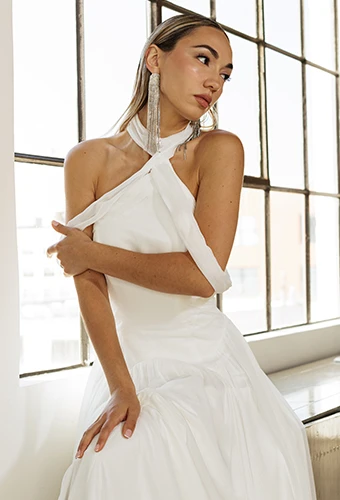
The best wedding dress fabric is the one that flatters your body type, fits your wedding season and matches your venue.
Some fabrics create structure and shape. Others feel soft and airy. The right fabric will highlight your silhouette, feel comfortable all day and bring your vision to life.
If you’ve ever wondered why two dresses with the same silhouette look completely different, the answer is fabric.
This guide breaks down the most popular wedding dress fabrics and helps you find the most flattering one.
Why Wedding Dress Fabrics Matter
When brides start shopping, they usually focus on silhouette—A-line, fit-and-flare, sheath or ballgown. But the right fabric is what brings the silhouette to life.
Wedding dress fabrics affect:
- How the gown moves
- How it fits against your body
- How breathable it feels
- How it photographs
- How structured or soft it appears
At True Society, many brides are surprised by how different a gown feels once they try it on. A dress that appears understated online can feel captivating in person because of the fabric.
Fabric isn’t just a detail. It’s a foundation of your bridal look.
Types of Wedding Dress Fabrics
Below are the most popular wedding dress fabrics and what makes each one unique.
Lace Wedding Dress Fabric
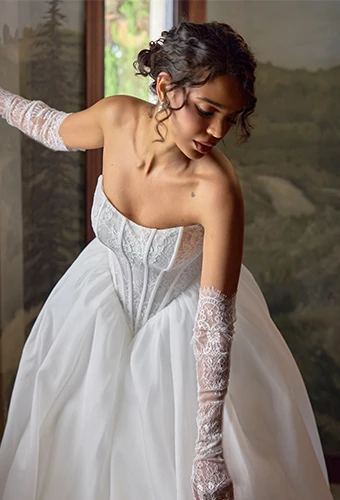
Lace is one of the most popular wedding dress fabrics because it adds texture, detail and romance.
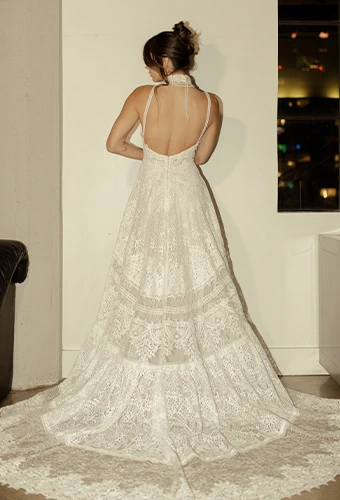
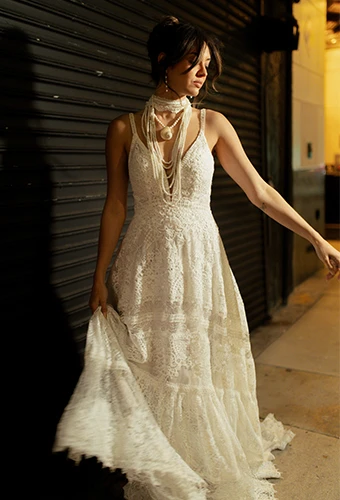
There are many types of lace, from soft Chantilly lace to bold floral appliqué layered over tulle. Some lace feels delicate and vintage. Other lace designs feel modern and graphic.
Lace wedding dresses are perfect for garden weddings, historic venues and romantic themes. Lace also carries deep tradition. For centuries, lace has symbolized elegance and timeless love.
Best for: Romantic brides, detailed bodices, long sleeves and textured gowns.
Satin Wedding Dress Fabric
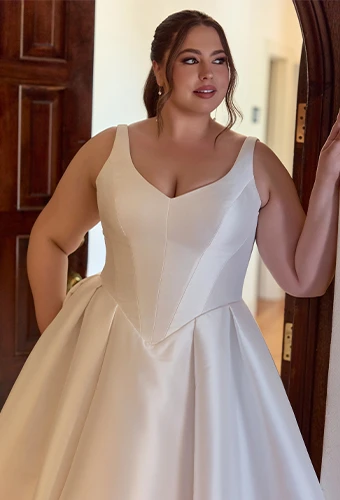
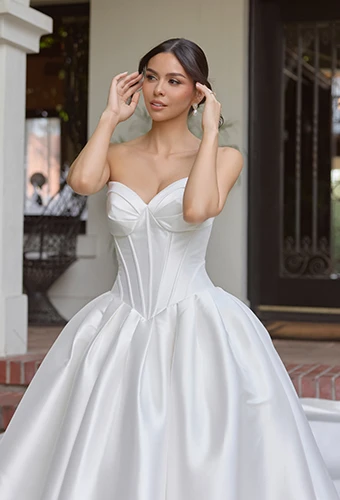
Satin is smooth, structured and slightly glossy. It reflects light in a soft way and creates a polished finish.
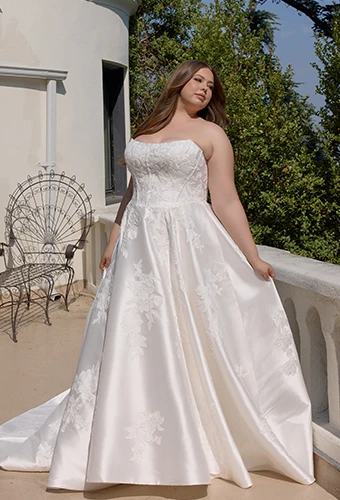
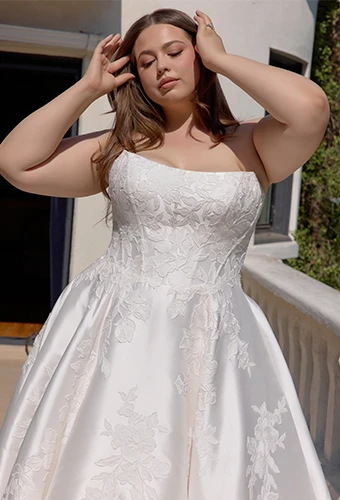
Satin wedding dresses are often used in ball gowns and classic A-line silhouettes because the fabric holds its shape beautifully. It creates clean lines and dramatic trains.
If you’re planning a formal or black-tie wedding, satin is a strong choice. It feels traditional but can still look modern when paired with minimalist design.
Best for: Ballroom weddings, church ceremonies and structured silhouettes.
Crepe Wedding Dress Fabric
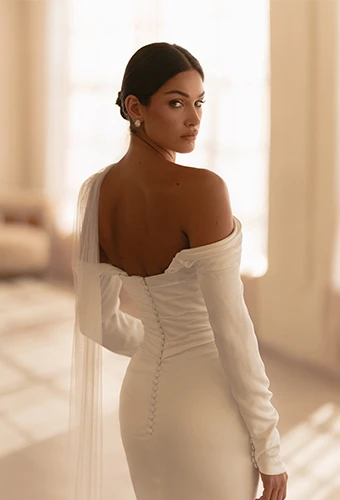
Crepe has a matte finish and gently hugs the body. It feels smooth but not shiny, which makes it popular for modern brides.
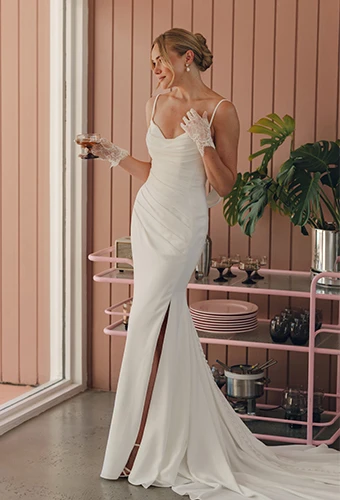
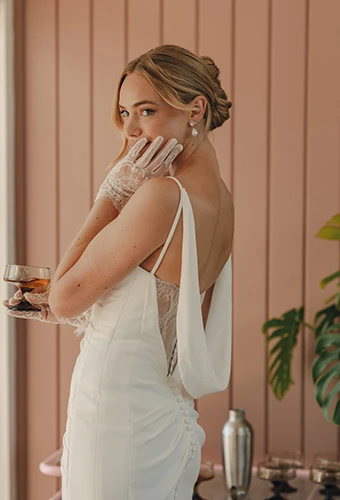
Crepe wedding dresses are especially flattering in sheath, column and fit-and-flare silhouettes. The fabric skims curves without adding volume.
Brides who love clean lines and simple elegance often choose crepe. It works beautifully in contemporary venues or city settings.
Best for: Minimalist brides and sleek silhouettes.
Chiffon Wedding Dress Fabric
Chiffon is lightweight, breathable and soft. It moves easily and feels comfortable, especially in warm weather.
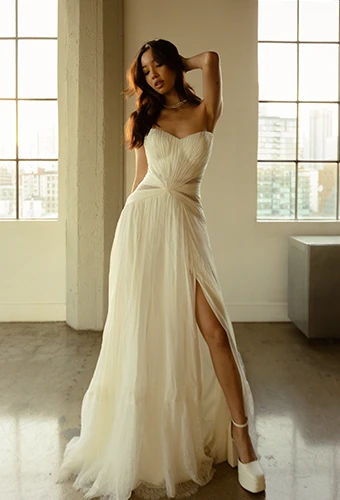
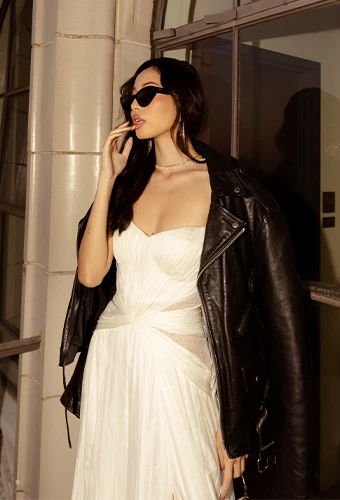
If you’re planning a beach or summer wedding, chiffon wedding dresses are ideal. The fabric floats when you walk and won’t feel heavy outdoors.
Chiffon creates a relaxed and romantic feel without sacrificing elegance.
Best for: Summer weddings and outdoor ceremonies.
Tulle Wedding Dress Fabric
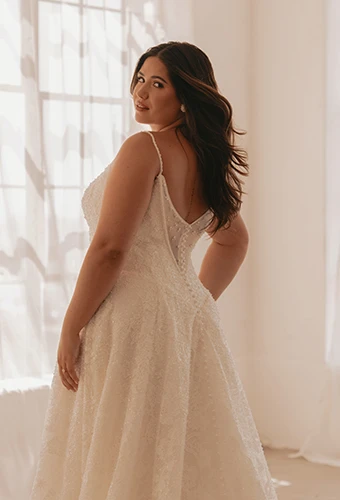
Tulle creates volume without excessive weight. It’s often layered to form full skirts or soft overlays.
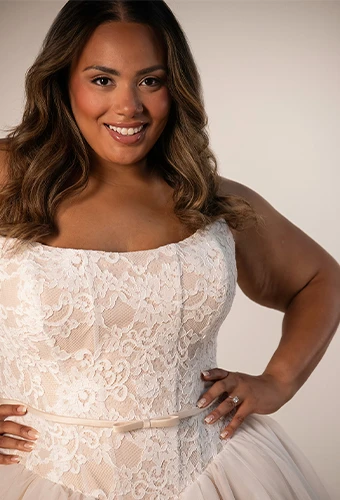
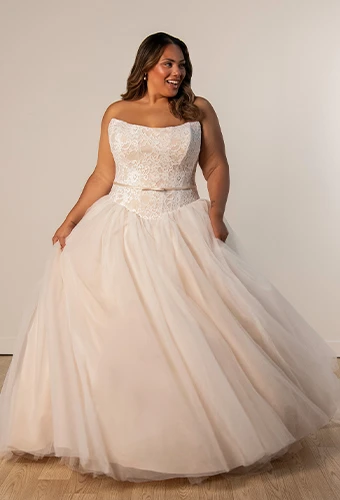
This is the fabric behind many fairytale-inspired gowns. It can feel dramatic in a ballgown or subtle when layered lightly.
Tulle wedding dresses are perfect for brides who want that dreamy aisle moment.
Best for: Romantic ball gowns and whimsical styles.
Mikado Wedding Dress Fabric
Mikado is a thicker silk blend known for structure. It holds shape better than many other wedding dress fabrics.
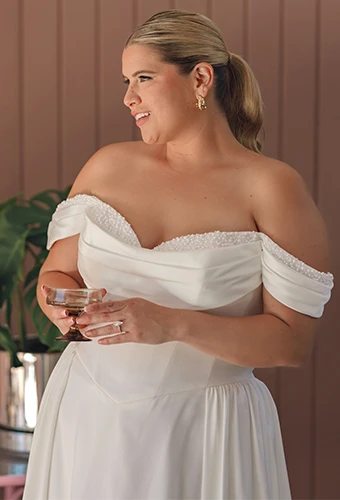
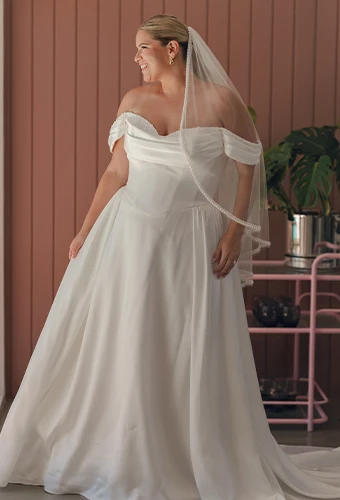
Designers often use Mikado for sculpted skirts, bold bows and architectural details. The result feels strong, clean and elevated.
If you love sharp lines and dramatic silhouettes, Mikado may be your match.
Best for: Statement gowns and structured A-line or ballgowns.
Structured vs. Flowing Wedding Dress Fabrics
Understanding the difference between structured and flowing wedding dress fabrics can help narrow your search.
Structured fabrics like satin and Mikado define the waist and hold their shape. They create a sculpted look and offer support.
Flowing fabrics like chiffon and lightweight crepe move naturally with your body. They feel breathable and soft.
Neither is better. It depends on whether you want definition or movement.
The Most Flattering Wedding Dress Fabric for Your Body Type
Choosing the most flattering wedding dress fabric starts with understanding how different materials shape and support your silhouette.
| Bride Type | Most Flattering Wedding Dress Fabrics | Why These Fabrics Work | Best Silhouettes to Pair |
| Plus-Size Brides | Structured crepe, satin, Mikado | Provide support, define the waist and smooth curves without adding bulk | A-line, fit-and-flare, structured ball gown |
| Petite Brides | Lightweight chiffon, crepe, soft satin | Create length and prevent overwhelming the frame | Sheath, column, slim A-line |
| Curvy Brides | Stretch crepe, structured satin, lace with strategic appliqué | Highlight the waist and move comfortably with natural curves | Fit-and-flare, mermaid, corset bodice styles |
| Boho Brides | Embroidered tulle, soft lace, chiffon | Add texture and movement for a relaxed, romantic feel | Flowing A-line, soft sheath |
| Modern Minimalist Brides | Matte crepe, clean satin, Mikado | Keep focus on silhouette with smooth, clean lines | Column, sleek A-line, structured strapless |
Wedding Dress Fabrics by Season
Choosing wedding dress fabrics by season helps ensure comfort, breathability and the right overall look for your setting.
| Wedding Season | Best Wedding Dress Fabrics | Why These Fabrics Work | Ideal Wedding Settings |
| Spring | Floral lace, soft tulle, light satin | Fresh, romantic textures that feel light and soft | Garden weddings, outdoor ceremonies, greenhouse venues |
| Summer | Chiffon, organza, lightweight crepe | Breathable, airy fabrics that keep you cool | Beach weddings, destination weddings, outdoor venues |
| Fall | Lace overlays, satin, structured blends | Slightly richer fabrics that add depth without heaviness | Vineyard weddings, rustic barns, historic venues |
| Winter | Mikado, heavier satin, long-sleeve lace | Structured fabrics that feel warm and elegant | Ballrooms, churches, formal indoor venues |
How Fabric Affects Bridal Dress Price
Luxury wedding dress fabrics often include silk blends, hand-placed lace appliqué and intricate beading. These details increase craftsmanship and cost.
Synthetic blends and simpler construction can lower the price while still offering beauty and structure.
At True Society, our designers—including Essense of Australia, Stella York, Martina Liana and All Who Wander—offer a range of price points.
Frequently Asked Questions About Wedding Dress Fabrics
What is the most comfortable wedding dress fabric?
Lightweight crepe and chiffon are often considered the most comfortable wedding dress fabrics because they move easily and feel breathable.
Which wedding dress fabric wrinkles the least?
Mikado and heavier satin resist wrinkles better than chiffon or silk.
What fabric is best for hot weather weddings?
Chiffon, organza and lightweight crepe are best for warm climates.
Is lace heavier than satin?
Some lace is lightweight, but heavily beaded lace can add weight. It depends on the design.
Final Thoughts: Choosing the Right Wedding Gown Fabric
Wedding gown fabrics shape the entire look and feel of your gown.
- It’s the softness of lace.
- The glow of satin.
- The clean confidence of crepe.
- The movement of chiffon.
When you experience these fabrics in person, you’ll understand the difference immediately.
Find a True Society location near you and book an appointment with our True Crew. Your dream dress starts with the right foundation.